CUTEK® Product Range
CUTEK® WOOD STRIPPER
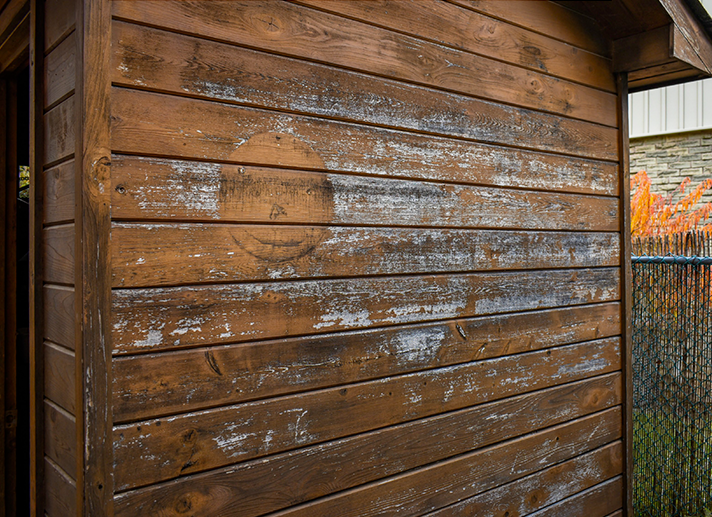
Existing paints, stains and film-forming coatings can prevent a penetrating wood oil from reaching the wood beneath.
CUTEK® Wood Stripper removes existing wood coatings to expose the bare wood, ready for restoration with CUTEK® Wood Reviver and protection with CUTEK® Extreme.
 Application
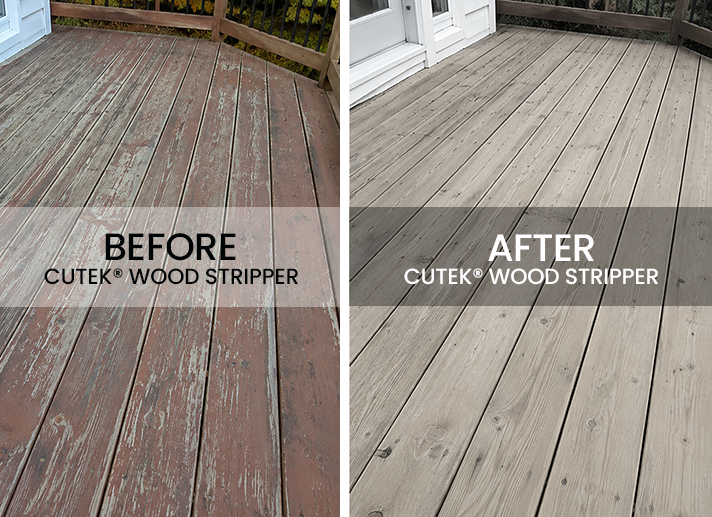
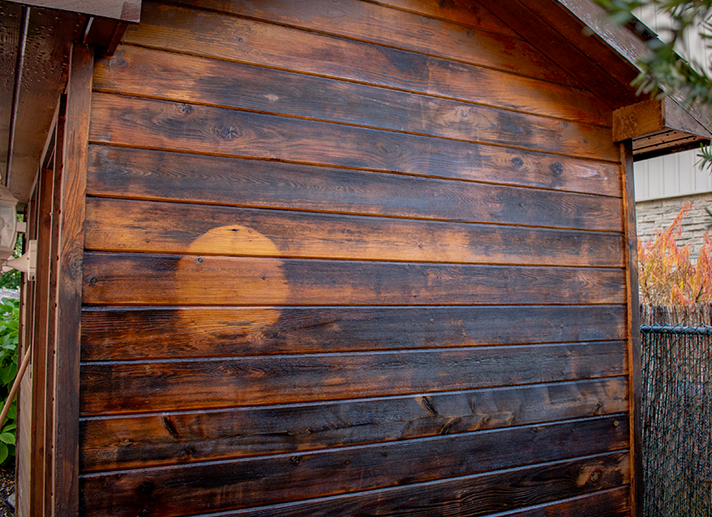
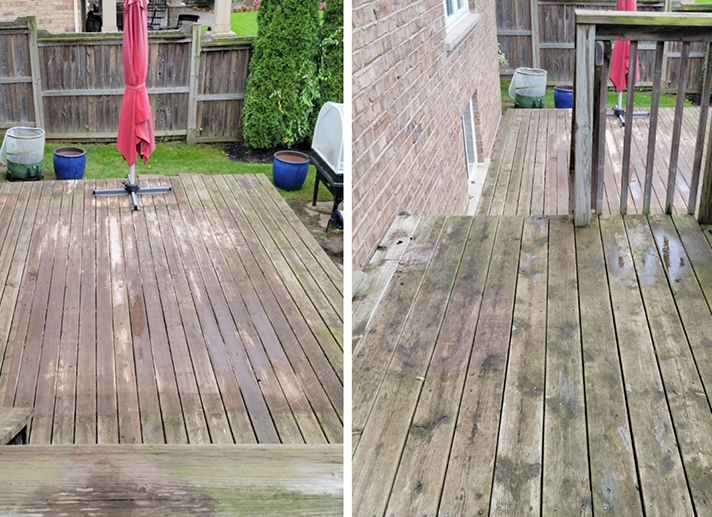
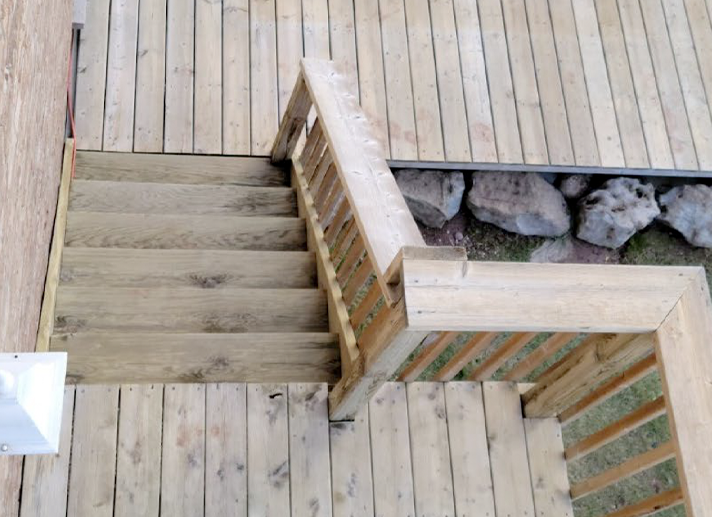

SEE CUTEK® WOOD STRIPPER IN ACTION
Watch how CUTEK® Wood Stripper lifts existing coatings from wood before restoration and recoating.
HOW DOES CUTEK® WOOD STRIPPER WORK?
PRODUCT DETAIL
You generally do not need CUTEK® Wood Stripper when maintaining wood already protected with CUTEK® Extreme, because Extreme does not form a surface film.
For routine cleaning use CUTEK® Quickclean. For bare, gray, weathered or stained wood use CUTEK® Wood Reviver.
Why do I need to remove old coatings?
Extreme is designed to penetrate deep into bare wood. Existing film-forming coatings can block that penetration and must be removed before Extreme is applied.
Wood Stripper softens and lifts existing coatings so they can be removed from the wood.
What happens after stripping?
Stripping is the first stage of the restoration process.
Once the existing coating has been removed, use Wood Reviver to remove remaining residue, restore the wood and prepare it for Extreme.
Strips up to 150 sq. ft. of timber. Spreading it over a larger area may reduce its effectiveness in removing old coatings.
1–Test first
Test a small section to determine how quickly the existing coating responds and whether more than one application will be required.
2–Apply to dry wood
Apply CUTEK® Wood Stripper evenly to dry wood using a brush, roller or paint pad.
3–Allow it to work
Allow approximately 30–60 minutes for the coating to soften. Don't let the product dry - agitate where required.
4–Test and remove
Use a scraper to test whether the old coating is releasing cleanly. Once ready, pressure rinse thoroughly using a fan spray.
Thick or multiple coating layers may require a second application.
Always follow the product label, Safety Data Sheet and Technical Data Sheet for complete instructions.
Once the existing coating has been completely removed:
1–Revive the wood
Use CUTEK® Wood Reviver to remove residual stripper, restore the wood and prepare the surface.
2–Dry
Allow the wood to dry completely. Moisture content must be below 17% before applying CUTEK® Extreme.
3-Protect the wood
Apply CUTEK® Extreme to protect the wood from within. Add CUTEK® Colortone where color and UV protection are required.
STRIP → REVIVE → PROTECT
Downloads


FAQ Frequently Asked Questions
Not sure where to start? Look at the state of the wood.
Dirt and grime? Clean it. → CUTEK® Quickclean
Weathering or staining? Revive it. → CUTEK® Wood Reviver
An unwanted coating? Strip it. → CUTEK® Wood Stripper
Only if there is an existing coating or treatment that needs to be removed.
CUTEK® Extreme is designed to penetrate deeply into clean, bare and dry wood. Existing paints, stains, film-forming coatings or other treatments that prevent penetration need to be completely removed before Extreme is applied.
If your wood is already bare, you may not need CUTEK® Wood Stripper at all. Instead, look at the condition of the wood:
Dirt and grime? Clean it. → CUTEK® Quickclean
Weathering or staining? Revive it. → CUTEK® Wood Reviver
An unwanted coating? Strip it. → CUTEK® Wood Stripper
If you're maintaining wood already protected with Extreme, you generally don't need to strip it before recoating. Clean and prepare the wood as required, then apply your maintenance coat.
CUTEK® Wood Stripper is designed to remove multiple layers of many commonly used wood coatings, including latex paints, stains, varnishes, linseed oils, acrylics, and other film-forming coatings. Because coatings can vary significantly, always test a small area first.
CUTEK® Wood Stripper is designed for use on wood, but care should be taken during the removal process. When power rinsing, use approximately 750 psi with a fan spray pattern and keep at least 4 inches from the surface. Excessive pressure can damage or “fur” the wood fibers, so always test your technique on a small area first.
Yes. CUTEK® Wood Stripper can also be used to remove coatings from metal, brick, and masonry surfaces. Always test a small, inconspicuous area first to confirm suitability.
Allow approximately 30–60 minutes reaction time, do no let the product dry, keep the area active by applying more CUTEK® Wood Stripper or agitating it as required. Test periodically with a paint scraper. When the old coating strips cleanly from the wood, it’s ready to be rinsed.
Some thick or multi-layered coatings may require more than one application. Testing a small area first will help you determine the working time, amount of product, and technique required for your particular coating.
No. CUTEK® Wood Stripper must be thoroughly power rinsed from the surface. For best results, use a pressure washer at approximately 750 psi (50 bar) with a fan spray pattern, keeping at least 4 inches from the wood. A garden hose alone is not sufficient.
Before and after contact, thoroughly flush nearby vegetation, paths, concrete, asphalt, and other adjacent surfaces with water. When rinsing, also be mindful of wind drift into areas containing vehicles or pedestrian traffic.
Yes. Keep the container tightly closed and store it in a dry, cool, well-ventilated area, away from heat, direct sunlight, acids, and strong oxidizing agents. Keep out of reach of children and always store the product in a container made from the same material as the original container.
Dispose of leftover product and containers in accordance with your local regulations. Even empty containers may retain product residue and should be taken to an approved waste handling site for recycling, disposal, or collection as appropriate.
For best results, yes. CUTEK® Wood Reviver helps remove any residual CUTEK® Wood Stripper, rejuvenates the wood, and prepares the surface for its new protective coating.
CUTEK® Wood Stripper can be used indoors, but additional care is required. Ensure the area is well ventilated and protect floors, walls, furnishings, fixtures, and any adjacent surfaces you do not want to strip. Avoid contact with skin and eyes, avoid breathing vapors or spray mist, and always follow the safety precautions on the product label and Safety Data Sheet.
Wood Stripper must also be thoroughly power rinsed from the surface after use. Because this can make indoor application impractical, carefully consider how the product and rinse water will be contained and removed before starting your project.
CUTEK® Wood Stripper can be used on a wide range of wood projects where an existing coating needs to be removed. Always test a small area first to confirm suitability and determine the best working time and technique for your project.
CUTEK® Extreme performs best when applied to bare, clean, and dry wood, allowing the oil to penetrate deeply into the wood. Existing film-forming coatings such as stains, linseed oils, paints, polyurethane, and water-based coatings can prevent this penetration and must be removed before applying Extreme.
For best results:
Strip the existing coating with CUTEK® Wood Stripper. It is a powerful, user-friendly stripper designed to remove multiple layers of many commonly used wood coatings.
Revive the wood with CUTEK® Wood Reviver to help remove residual Wood Stripper, restore the natural color of weathered or stained wood, and enhance the grain.
Protect the wood with Extreme once the wood is clean and dry.
Extreme penetrates deeply into the wood to help repel and displace moisture, improving dimensional stability and extending the service life of your wood.
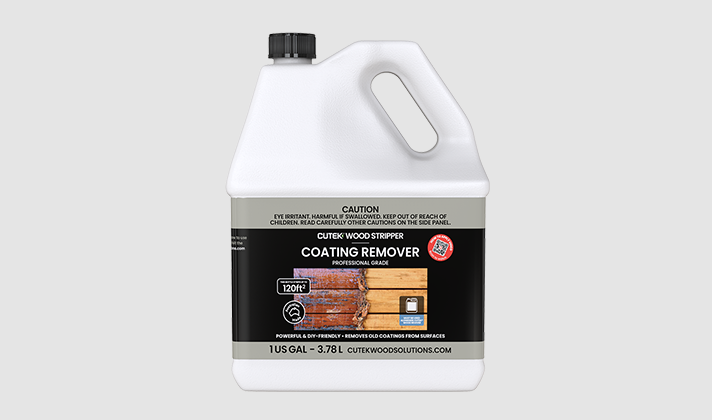
As a guide, 1 gallon of CUTEK® Wood Stripper covers approximately 120 ft². Actual coverage will vary depending on the surface, existing coating, application method, and condition of the wood. Thick or multi-layered coatings may also require more than one application.
CUTEK® Wood Stripper should not be allowed to dry, or it will not stay active and working. If the surface begins to dry, apply more Wood Stripper and agitate the area with a brush, roller, or paint pad. Once the existing coating strips cleanly from the wood, thoroughly power rinse the surface.
The goal is clean, bare wood with no remaining coating preventing penetration.
After stripping and rinsing, inspect the wood carefully once it is clean. Look for areas where the old coating is still visible or where the surface appears sealed rather than bare.
Pay particular attention to joints, edges, grooves, textured areas and other places where old coating can remain.
If coating remains, another application of CUTEK® Wood Stripper may be required in those areas.
Once the unwanted coating has been removed, use CUTEK® Wood Reviver for best results to help remove residual contaminants and restore the natural appearance of the wood before allowing it to dry thoroughly.
Don't move on to CUTEK® Extreme until the wood is clean, bare and able to accept the oil.

CUTEK® RESOURCE CENTRE
Product guides, how-to advice, color tools and project inspiration to help you choose the right CUTEK® products and get the best result from your wood.
CUTEK® Wood Reviver
Wood naturally changes color when exposed to sun and weather, gradually developing a silver-grey appearance that softens and masks the wood's original color.
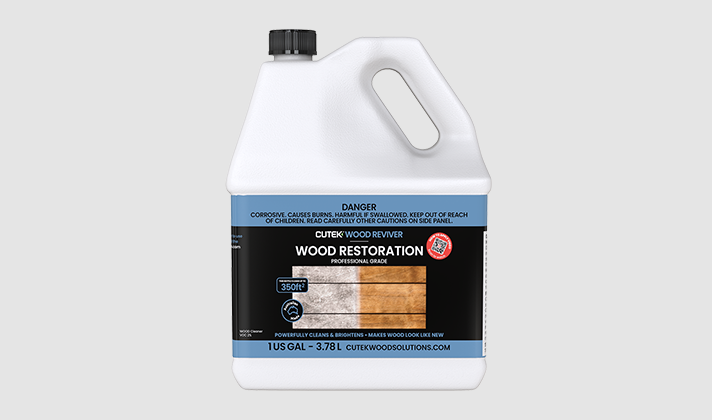
CUTEK® Wood Reviver deep cleans and restores weathered wood, removes stubborn stains and prepares new or existing wood for protection with CUTEK® Extreme.
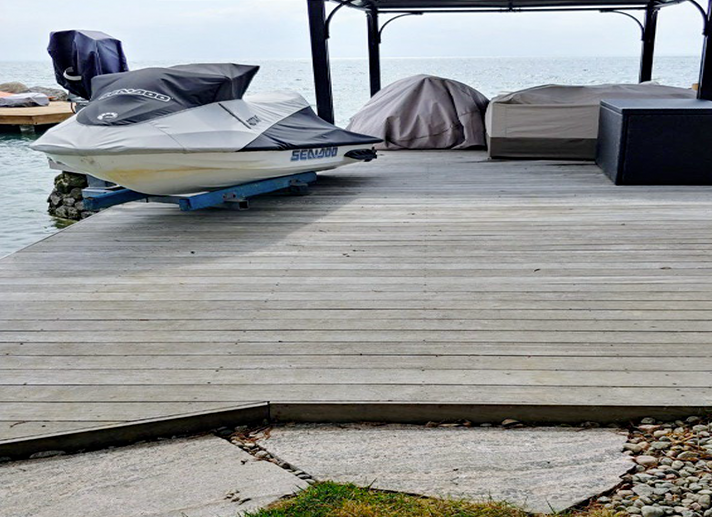
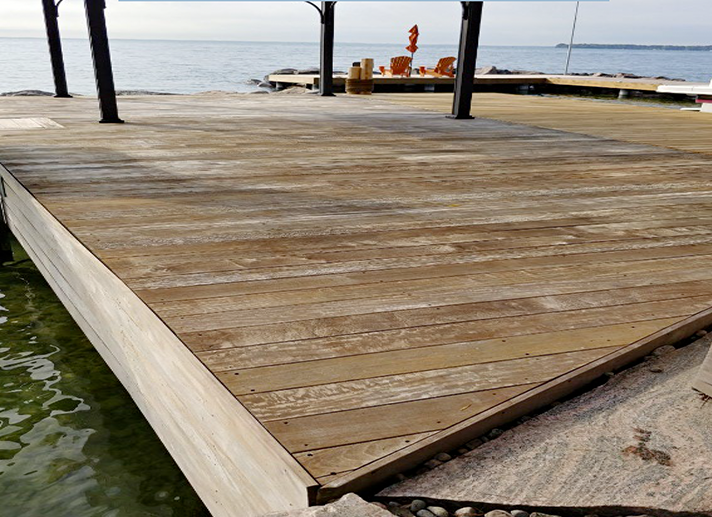
SEE CUTEK® WOOD REVIVER IN ACTION
Watch how CUTEK® Wood Reviver lifts weathering and staining to reveal the natural wood beneath.
HOW DOES CUTEK® WOOD REVIVER WORK?
PRODUCT DETAIL
What does CUTEK® Wood Reviver remove?
CUTEK® Wood Reviver is a powerful wood restoration cleaner designed to brighten weathered and gray wood and remove stubborn surface staining.
It is effective on staining caused by tannins, water, iron, resins, mold and fungus, and can also remove mill glaze from newly machined wood.
CUTEK® Quickclean or CUTEK® Wood Reviver?
Use CUTEK® Quickclean for everyday dirt, grease and grime or routine maintenance.
Use CUTEK® Wood Reviver when the wood itself needs restoring due to graying, weathering or stubborn staining.
Wood Reviver will not remove paint or existing wood coatings. Use CUTEK® Wood Stripper for coated wood.
Revives up to 350 sq. ft. of timber. Spreading it over a larger area may reduce its ability to restore weathered wood.
1–Test the wood
Always test a small area first to determine the appropriate dilution and working time.
2–Wet and apply
Wet the wood with clean water, then apply Wood Reviver liberally using a brush, roller, or broom.
3–Allow Wood Reviver to work
Leave the product on the surface for 1-24 hours, depending on the level of weathering or staining. Stubborn areas may require light scrubbing.
4–Rinse thoroughly
Allow the wood to dry completely before applying CUTEK® Extreme.
Downloads
FAQ Frequently Asked Questions
CUTEK® Wood Reviver is a commercial strength restoration agent with a thirty-year pedigree. Designed by professionals for professionals, it works quickly to remove heavy discoloration, graying, iron stains, water stains, mold stains etc. from all species of wood, while brightening the natural grain. Unlike most DIY cleaners, Wood Reviver keeps working with a deep cleaning action, continuing the restoration process when others stop, without needing to keep the wood’s surface wet.
CUTEK® Quickclean is a powerful general purpose outdoor cleaner that removes dirt, grease and grime from outdoor surfaces. It is excellent to use to clean wood in preparation for a maintenance coat of CUTEK® Extreme.
CUTEK® Wood Reviver is a wood restoration agent that restores stained, weathered and gray wood back to its original appearance. Wood Reviver is effective in removing stubborn stains caused by tannins, water, iron, resins, mold and fungus. It should be used for weathered wood, to remove stains from wood and/or to restore wood back to its original appearance. Typically, Wood Reviver is utilized to rejuvenate wood before the initial coat of Extreme is applied. It can also be used to prepare new wood for coating by removing common side effects of machining lumber such as “mill glaze” and excess extractives.
Not sure where to start? Look at the state of the wood.
Dirt and grime? Clean it. → CUTEK® Quickclean
Weathering or staining? Revive it. → CUTEK® Wood Reviver
An unwanted coating? Strip it. → CUTEK® Wood Stripper
CUTEK® Wood Reviver cleans, brightens, and restores weathered, grayed, or stained wood. It can also help remove stubborn stains and prepare new wood for coating by removing mill glaze and excess tannins.
CUTEK® Wood Reviver is effective against stains caused by tannins, water, iron, resins, mold, and fungus. Always test a small area first, as results can vary depending on the wood species and condition.
Yes. CUTEK® Wood Reviver is designed to restore weathered, grayed, or silvered wood toward its original appearance, helping bring back the natural color and character of the wood.
Yes. CUTEK® Wood Reviver can be used on new wood to remove staining, mill glaze and excess tannins before coating. This helps prepare the surface for CUTEK® Extreme.
Mill glaze is a smooth surface condition that can occur on newly sawn or machined wood. It can interfere with the way a coating penetrates or bonds to the surface. CUTEK® Wood Reviver can be used to remove mill glaze and prepare new wood for coating.
Not usually. CUTEK® Wood Reviver should typically be used at full strength, but in some circumstances can be diluted with water by up to 20% by volume, depending on the severity of staining or weathering and the condition of the wood.
Leave CUTEK® Wood Reviver on the surface for approximately 1 to 24 hours, depending on the severity of staining or discoloration. Stubborn areas may also need moderate scrubbing with a stiff-fiber brush.
Yes. CUTEK® Wood Reviver must be rinsed thoroughly, and a garden hose alone is not sufficient. For best results, use a pressure washer at approximately 750 psi with a wide fan spray pattern, keeping at least 4 inches from the wood.
CUTEK® Wood Reviver is designed for use on wood, but care is needed when power rinsing. Excessive pressure can damage or “fur” the wood fibers, so adjust the pressure or distance from the surface as required and never use a turbo jet on wood.
Yes. For best results, we recommend using CUTEK® Wood Reviver after stripping. It helps remove residual CUTEK® Wood Stripper, rejuvenates the wood, and prepares the surface for its new protective coating.
As a guide, CUTEK® Wood Reviver covers approximately 200–300 ft² per US gallon. Actual coverage will vary depending on the wood species, surface condition, porosity, and application method.
Protect adjacent surfaces and vegetation before you begin. If contact occurs, flush the affected area thoroughly with water. Pay particular attention to nearby metal surfaces, as CUTEK® Wood Reviver may be corrosive to metals.
CUTEK® Wood Reviver can be used indoors only where appropriate ventilation, surface protection, and rinse-water management can be safely accommodated. Protect floors, walls, fixtures, furnishings, and nearby surfaces before use, and always follow the PPE and ventilation requirements in the Safety Data Sheet. Because Wood Reviver must be thoroughly power rinsed, indoor use may not be practical in many situations.
Yes. Keep CUTEK® Wood Reviver in its original container, tightly closed, in a dry, cool, well-ventilated place and out of reach of children. Store it away from incompatible materials and follow the storage instructions on the label and Safety Data Sheet.
Empty containers may still contain product residue and should be disposed of in accordance with local regulations. Do not reuse the container. Check with your local waste authority for appropriate disposal or recycling requirements in your area.
CUTEK® Wood Reviver is specifically designed for use on wood. We recommend using it only for its intended purpose and protecting surrounding surfaces and materials during application. Always test on a small, inconspicuous area before beginning your project.
Not always. It depends on the condition of the wood.
CUTEK® Extreme needs to be applied to clean, bare and dry wood, but CUTEK® Wood Reviver is not a mandatory step for every project.
Look at the condition of the wood:
Dirt and grime? Clean it. → CUTEK® Quickclean
Weathering or discoloration? Revive it. → CUTEK® Wood Reviver
An unwanted coating? Strip it. → CUTEK® Wood Stripper
Wood Reviver is particularly useful for gray or weathered wood, stubborn staining or discoloration, mill glaze and other conditions where the natural appearance of the wood needs to be restored before applying Extreme.
After using Wood Reviver, rinse thoroughly and allow the wood to dry completely before applying Extreme.
Some stubborn staining or discoloration may require additional treatment.
If the first application hasn't achieved the desired result, assess the wood before moving on. Depending on the condition of the surface, you may need to repeat the application, allow additional working time or agitate stubborn areas with a suitable brush.
Always keep CUTEK® Wood Reviver wet while it is working and do not allow it to dry on the surface.
If the discoloration remains after further treatment, it may be caused by something that Wood Reviver is not designed to remove. Contact CUTEK® Technical Support with photos and details of the wood and staining before continuing.
CUTEK® RESOURCE CENTRE
Product guides, how-to advice, color tools and project inspiration to help you choose the right CUTEK® products and get the best result from your wood.
CUTEK® QUICKCLEAN
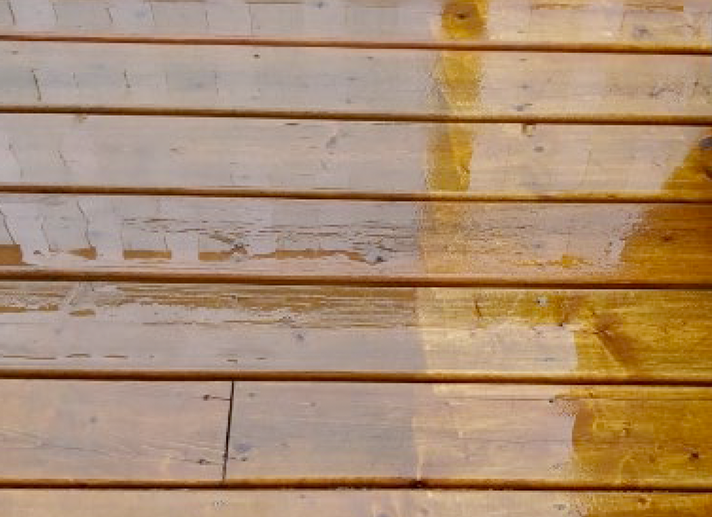
Dirt, grease and grime build up on exterior wood over time, leaving surfaces looking tired and affecting preparation for maintenance coats.
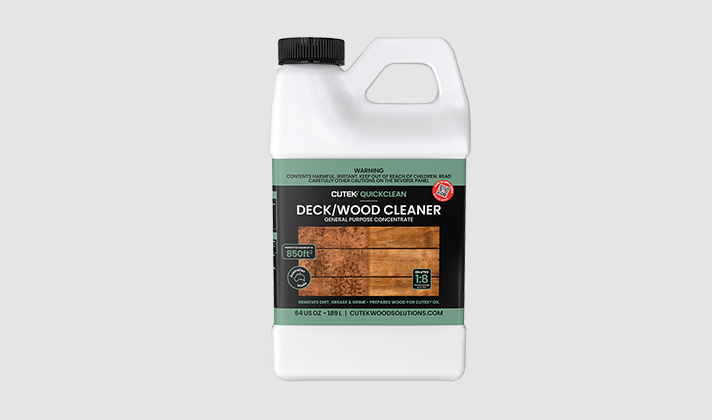
CUTEK® Quickclean is a concentrated exterior cleaner that removes everyday dirt, grease and grime and prepares wood for a maintenance coat of CUTEK® Extreme.
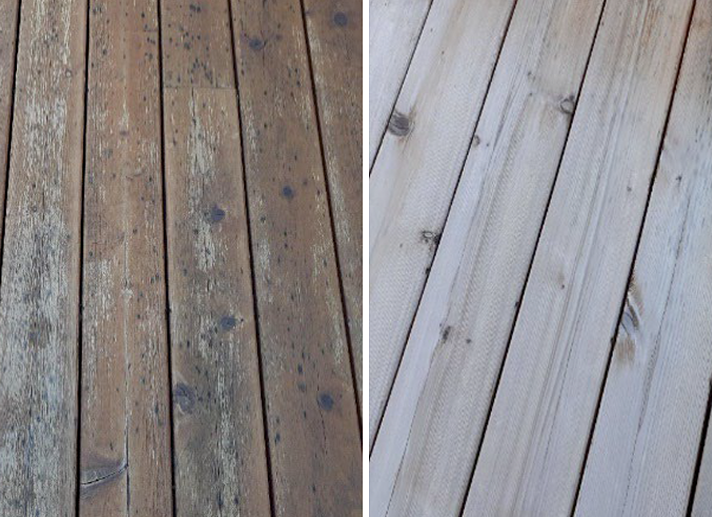
SEE CUTEK® QUICKCLEAN IN ACTION
Watch how CUTEK® Quickclean removes everyday surface build-up and prepares wood for ongoing maintenance.
HOW DOES CUTEK® QUICKCLEAN WORK?
PRODUCT DETAIL
Use CUTEK® Quickclean for routine cleaning or before recoating wood already protected with CUTEK® Extreme.
For gray, heavily weathered or stubbornly stained wood, use CUTEK® Wood Reviver.
For existing paint or coatings that need to be removed, use CUTEK® Wood Stripper.
Use CUTEK® Quickclean for routine cleaning or before recoating wood already protected with CUTEK® Extreme.
For gray, heavily weathered or stubbornly stained wood, use CUTEK® Wood Reviver.
For existing paint or coatings that need to be removed, use CUTEK® Wood Stripper.
CUTEK® Quickclean is a general-purpose exterior cleaner designed to remove surface dirt, grease and grime.
It can also help clean wood where CUTEK® Colortone has weathered unevenly before a maintenance coat is applied.
What it won't do
Quickclean is not designed to restore heavily weathered or gray wood or remove stubborn tannin, iron or water stains. Use CUTEK® Wood Reviver for these conditions.
It will not remove existing paint or wood coatings. Use CUTEK® Wood Stripper where a coating needs to be removed.
Cleans up to 850 sq. ft. of timber. Spreading it over a larger area may reduce its cleaning effectiveness.
1–Test and dilute
Dilute CUTEK® Quickclean with water as required and always test a small area first.
2–Wet the surface
Wet the wood or surface with clean water before application.
3–Apply and allow to work
Apply liberally with a brush, roller, or broom. Leave for approximately 5–15 minutes, keeping the surface wet. Light scrubbing may help with heavier build-up.
4–Rinse thoroughly
Rinse thoroughly with clean water. For best results on wood, use an appropriate pressure washer with a fan spray, working in the direction of the grain.
Always follow the product label, Safety Data Sheet and Technical Data Sheet for complete instructions.
If cleaning as part of CUTEK® Extreme maintenance, allow the wood to dry completely before recoating.
Once dry and below the required moisture level, apply a thin maintenance coat of Extreme, mixed with your chosen CUTEK® Colortone where color is being maintained.
If cleaning reveals significant graying, weathering or stubborn staining, prepare the wood with CUTEK® Wood Reviver before recoating.
Downloads
FAQ Frequently Asked Questions
Not sure where to start? Look at the state of the wood.
Dirt and grime? Clean it. → CUTEK® Quickclean
Weathering or staining? Revive it. → CUTEK® Wood Reviver
An unwanted coating? Strip it. → CUTEK® Wood Stripper
CUTEK® Quickclean is a powerful, concentrated general-purpose outdoor cleaner that removes dirt, grease, and grime. It’s ideal for regular wood cleaning, preparing wood for a maintenance coat of CUTEK® Extreme, and cleaning a wide range of other exterior hard surfaces.
CUTEK® Quickclean is a general-purpose outdoor cleaner designed to remove surface dirt, grease, and grime. It’s ideal for regular wood cleaning and preparing wood for a maintenance coat of CUTEK® Extreme.
CUTEK® Wood Reviver is designed for wood that needs more than a general clean. It restores gray and weathered wood, removes stubborn staining, and can also be used to remove mill glaze and extractives from new wood before coating.
In simple terms: dirt and grime? Clean it.
Weathering or staining? Revive it.
CUTEK® Quickclean is designed to remove surface dirt, grease, and grime. While it may remove some surface staining during cleaning, it is not designed to remove stubborn stains or restore gray and weathered wood.
For weathering or stubborn staining, use CUTEK® Wood Reviver.
No. CUTEK® Quickclean can help remove mold and fungal growth and staining from the surface of wood, but it does not kill mold.
Yes. CUTEK® Quickclean is a powerful cleaner and degreaser that can remove grease, grime, and oil or fat-based stains.
NOTE: For oil and fat-based spot cleaning, Quickclean can be used at full strength.
No. While CUTEK® Quickclean is an excellent way to clean wood before a maintenance coat of CUTEK® Extreme, it is also a versatile general-purpose outdoor cleaner and degreaser. It can be used to remove dirt, grease, and grime from a wide range of exterior hard surfaces.
Yes. Regular cleaning with CUTEK® Quickclean removes dirt, grease, and grime and prepares wood to optimize the performance of a maintenance coat of CUTEK® Extreme.
Yes. CUTEK® Quickclean can help even out CUTEK® Colortone that has begun to wear or erode unevenly on the wood, making it particularly useful when preparing for maintenance.
Yes. CUTEK® Quickclean is a versatile outdoor cleaner suitable for a range of hard surfaces, including composite decking, plastic, PVC, tiles, pavers, concrete, and glass. Always refer to the dilution guide which can be found on the product label or in the Technical Data Sheet (TDS) and test a small area first.
Yes. CUTEK® Quickclean can be used on composite decking. The recommended starting dilution is 1:8 for wood and composite decking, or 1:20 for PVC and capped composite decking. Always test a small area first.
Yes. CUTEK® Quickclean can clean a wide range of exterior hard surfaces, including concrete, pavers, tiles, PVC, plastic, and glass. Dilution requirements vary depending on the surface, so follow the dilution guide (which can be found on the product label or in the Technical Data Sheet (TDS)), and test before use.
Yes. Metal is included in the CUTEK® Quickclean dilution guide (which can be found on the product label or in the Technical Data Sheet (TDS)), with a recommended dilution of 1:50. Always test a small, inconspicuous area first.
Yes. CUTEK® Quickclean can be used to clean accidental spills of CUTEK® Extreme. For best results, deal with spills promptly and follow the Quickclean application and dilution instructions.
Yes, for most applications. CUTEK® Quickclean is a concentrate designed to be diluted with water according to the surface and level of dirt or grease. Always refer to the dilution guide which can be found on the product label or in the Technical Data Sheet (TDS), and complete a small test patch before cleaning the entire area.
The correct dilution depends on what you’re cleaning:
Oil and fat-based stains: full strength for spot cleaning
Wood and composite decking, wood shingles: 1:8
PVC and capped composite decking: 1:20
Plastic, PVC, ceramic tiles, canvas, and metal: 1:50
Glass: 1:100
Always test a small area first and adjust the dilution as required for the surface and level of soiling.
Leave CUTEK® Quickclean on the surface for approximately 5–15 minutes, depending on the severity of the dirt, soiling, or grease. Stubborn areas may require moderate scrubbing with a stiff-fiber brush.
Not always. Let CUTEK® Quickclean do the work first. For stubborn dirt, grease, or stains, moderate scrubbing with a stiff-fiber brush may be required before rinsing thoroughly.
No. CUTEK® Quickclean should be thoroughly rinsed from the surface after cleaning, but the appropriate rinsing method will depend on the surface being cleaned.
For wood, best results can be achieved using a pressure washer set to approximately 750 psi with a fan spray pattern, keeping at least 4 inches from the wood. If pressure washing isn’t practical, rinse thoroughly with clean water from a bucket or garden hose using a stiff brush and light scrubbing action.
For other surfaces, use a rinsing method appropriate for the substrate and take care not to damage the surface. Always test Quickclean on a small, inconspicuous area first.
CUTEK® Quickclean is designed for cleaning wood, but care should be taken when pressure washing. Excessive pressure can damage or “fur” wood fibers. Use approximately 750 psi with a fan spray pattern, keep at least 4 inches from the wood, and never use a turbo jet on wood.
Protect adjacent surfaces and vegetation before you begin. Water-flush nearby equipment, vegetation, paths, concrete, asphalt, and other adjacent surfaces before and after contact, and be mindful of spray or wind drift when rinsing.
CUTEK® Quickclean is formulated and documented as a general-purpose outdoor cleaner. Indoor use is not currently identified in the US Technical Data Sheet as a recommended application, so we recommend using Quickclean for its intended applications and following the product label and Safety Data Sheet.
Yes. Keep CUTEK® Quickclean tightly closed in a dry, cool, well-ventilated place, away from incompatible materials and out of reach of children.
Dispose of leftover CUTEK® Quickclean and its container safely and in accordance with local regulations. Check with your local waste authority for appropriate disposal or recycling requirements in your area.
Equipment can be cleaned with water after using CUTEK® Quickclean. Dispose of the resulting wash water in accordance with local regulations.
Not always. It depends on the condition of the wood.
CUTEK® Extreme needs to be applied to clean, bare and dry wood, but CUTEK® Quickclean is not a mandatory step for every project.
Look at the condition of the wood:
Dirt and grime? Clean it. → CUTEK® Quickclean
Weathering or discoloration? Revive it. → CUTEK® Wood Reviver
An unwanted coating? Strip it. → CUTEK® Wood Stripper
Quickclean is particularly useful for removing dirt, grease and grime, including when preparing wood for a maintenance coat of Extreme.
After cleaning, rinse the wood thoroughly and allow it to dry completely before applying Extreme.
The goal isn't to use every CUTEK® prep product - it's to use the right one for the condition of your wood.
CUTEK® RESOURCE CENTRE
Product guides, how-to advice, color tools and project inspiration to help you choose the right CUTEK® products and get the best result from your wood.
CUTEK® EXTREME CLEAR OIL
Exterior wood constantly absorbs and releases moisture. Over time, this leads to warping, cupping and splitting.
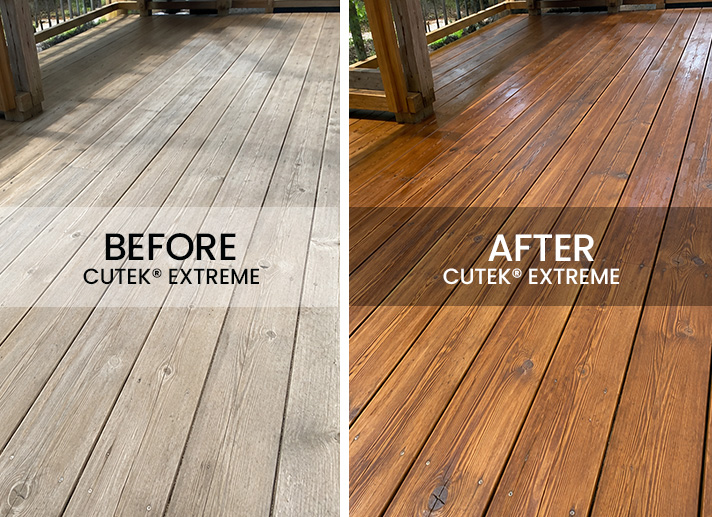
CUTEK® Extreme penetrates deeply into the wood to help stabilize and control moisture from within. With no surface film, it won’t peel or flake like traditional coatings.
CLEAR OR COLORED? YOU CHOOSE
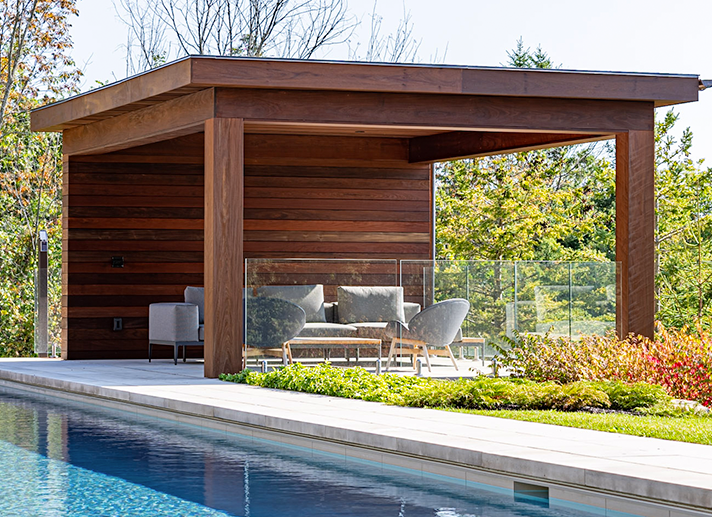
CUTEK® Extreme protects wood from within - color is optional.
Want Silver - choose Clear.
Retain or change the color - Add a CUTEK® Colortone
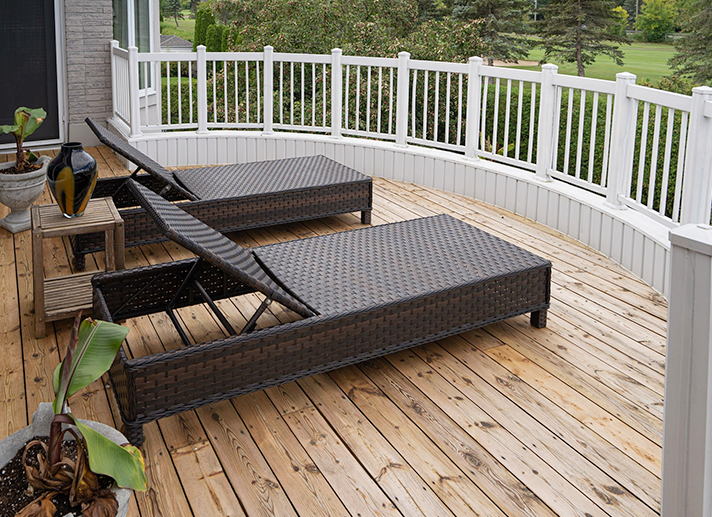
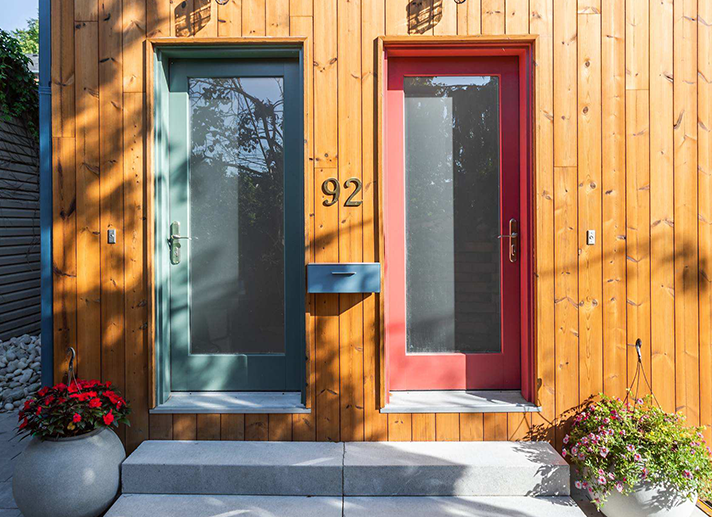
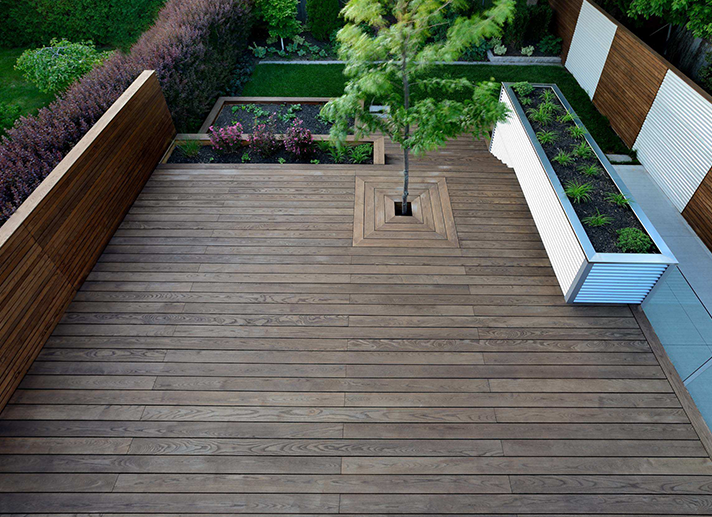
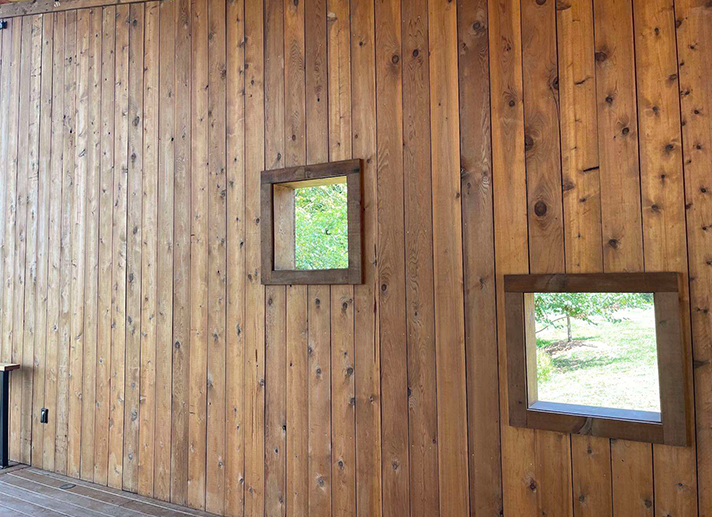
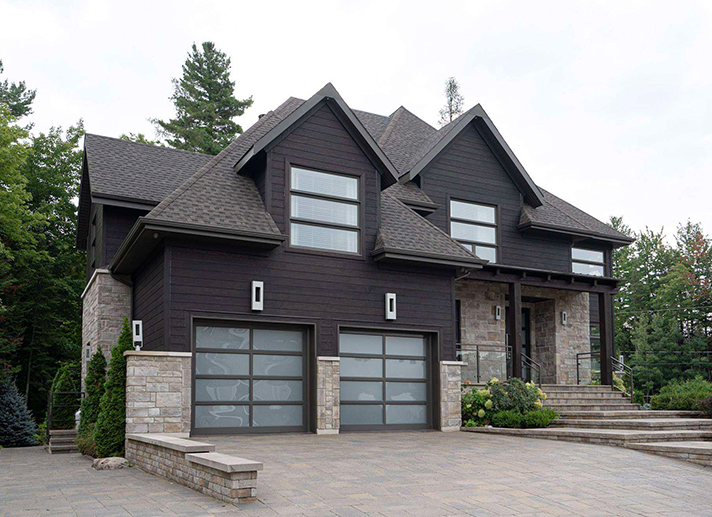
SEE CUTEK® EXTREME IN ACTION
Watch how CUTEK® Extreme penetrates and protects wood from within.
HOW DOES CUTEK® EXTREME PROTECT WOOD FROM WITHIN?
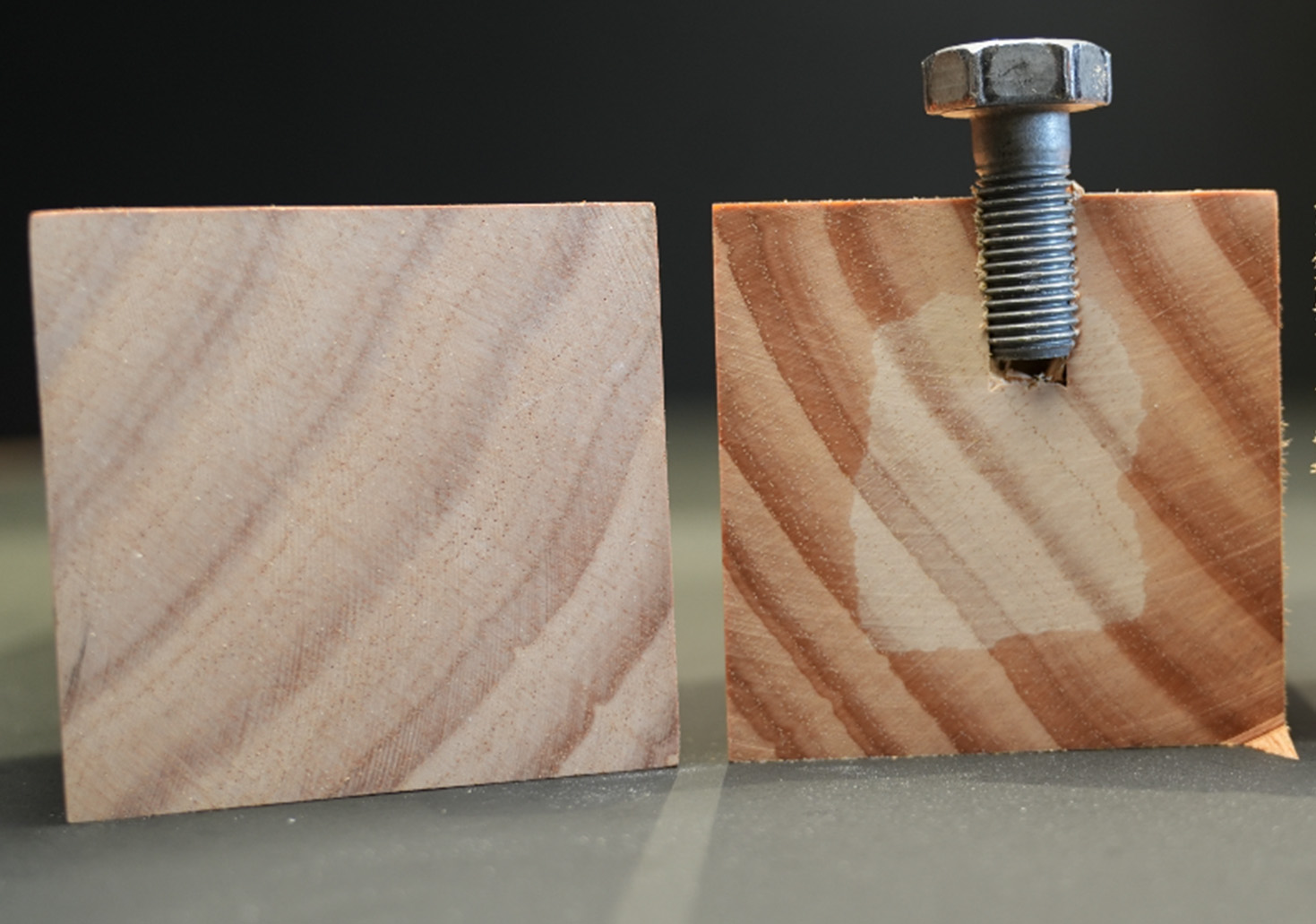
Competitor coating (left) vs CUTEK® Extreme (right). Both cut and left for 48 hours to reveal oil movement.
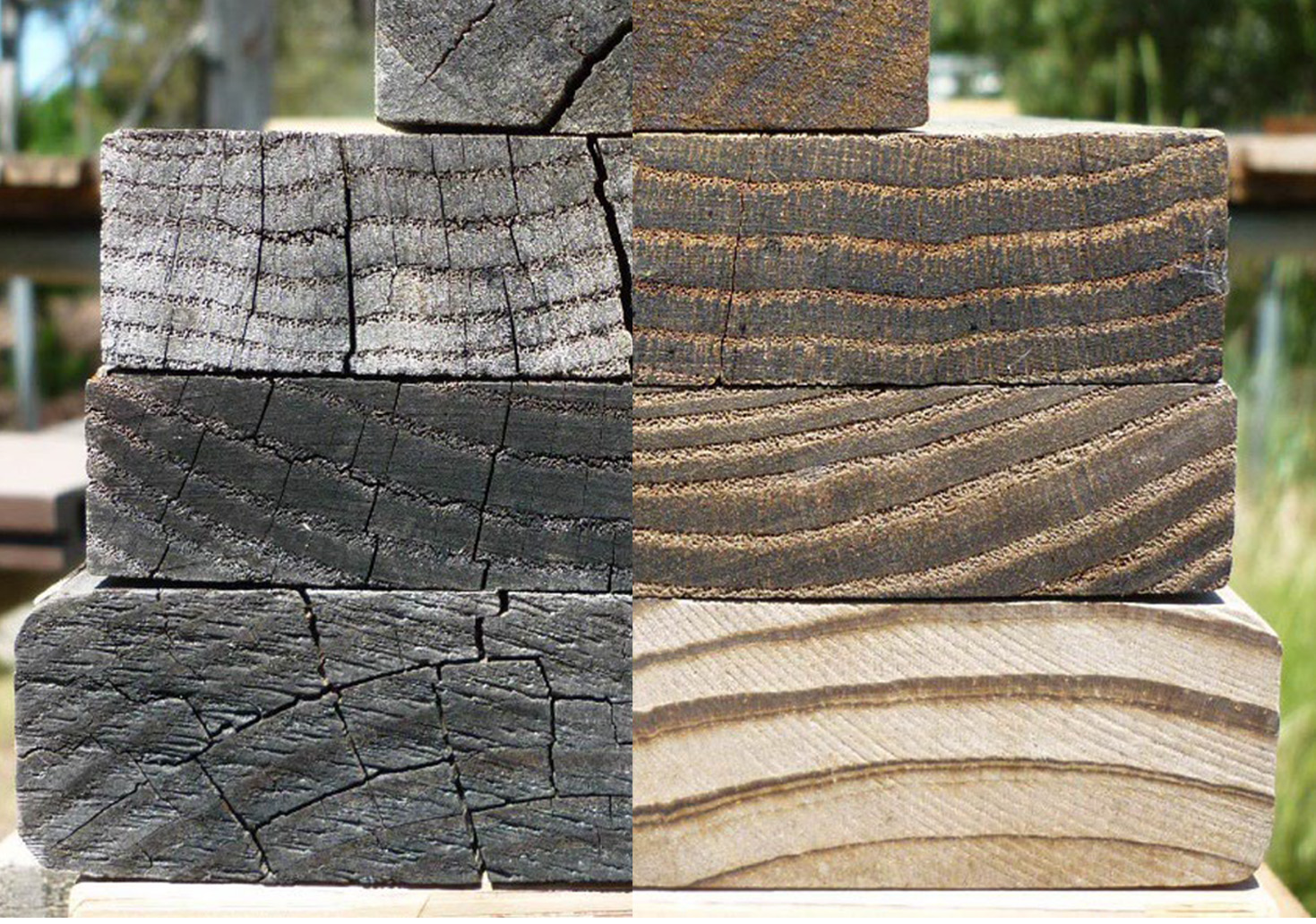
12 months of outdoor exposure. Compare the CUTEK® Extreme coated section against unprotected timber.
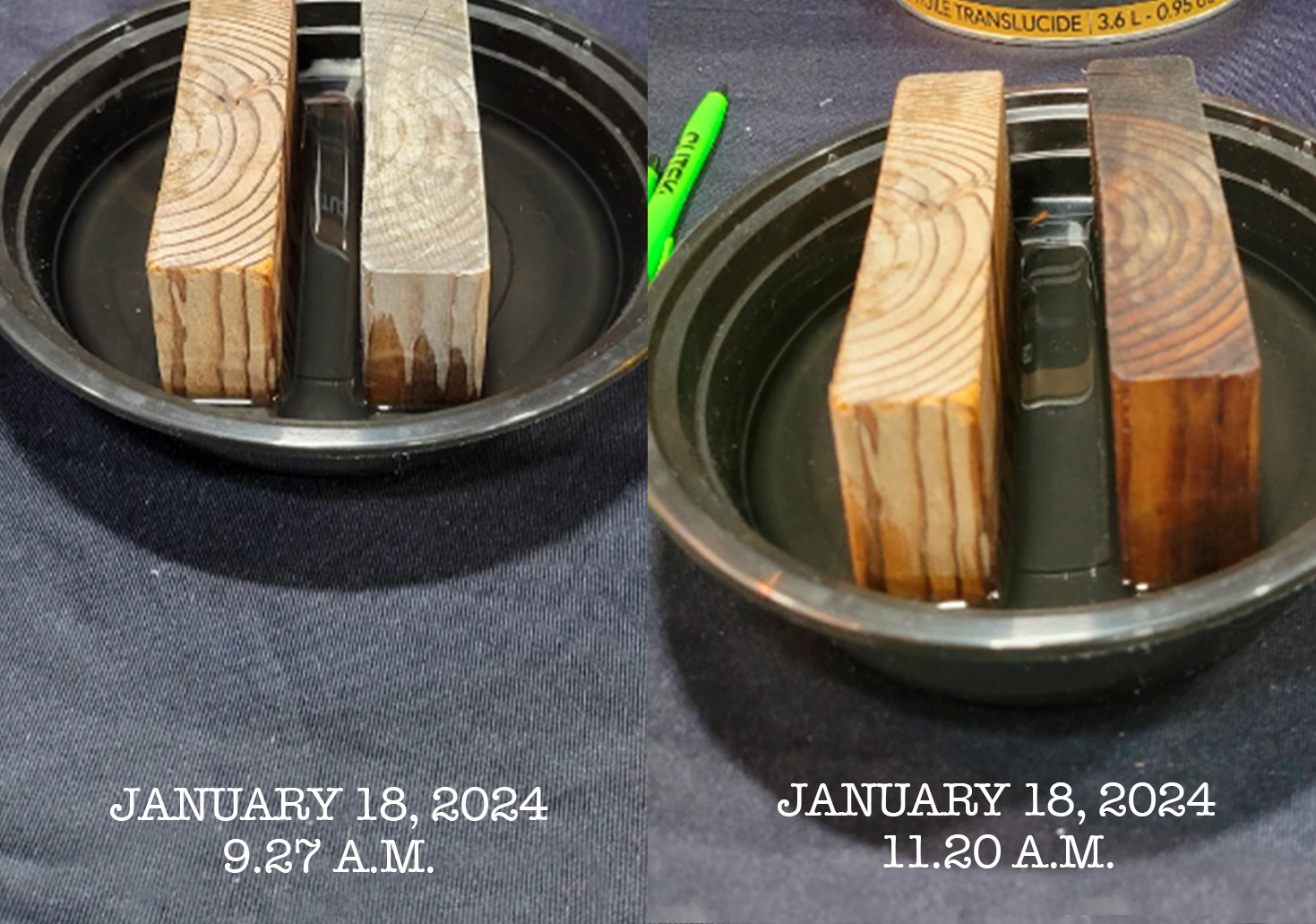
CUTEK® Extreme coated (left) vs unprotected (right). After one hour, water penetrates only the unprotected timber.
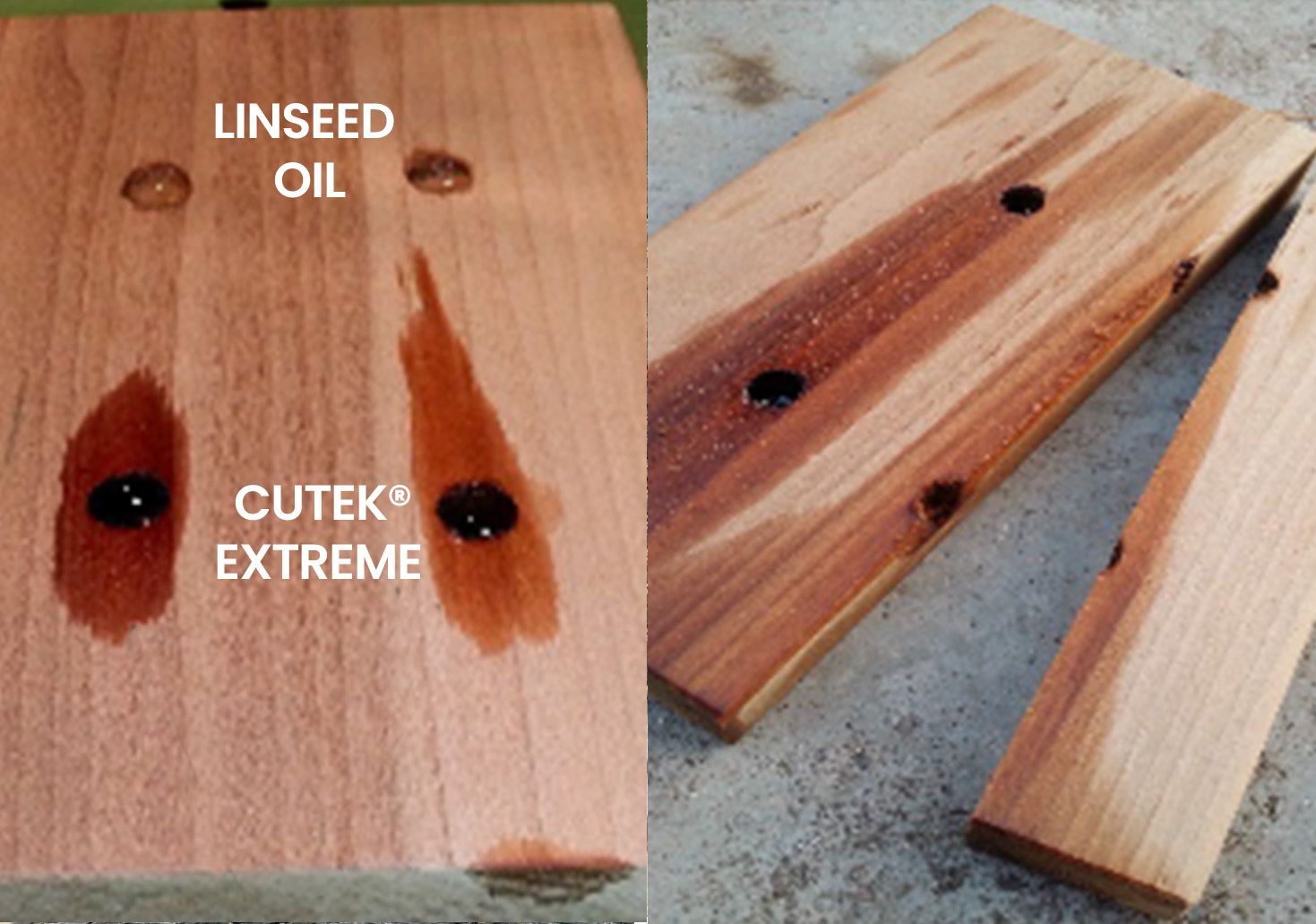
CUTEK® Extreme diffuses into and across timber, unlike linseed oil, which remains concentrated around the drilled holes.
4 project images
PRODUCT DETAIL
CUTEK® Extreme is a penetrating oil wood stabilizer designed to help control moisture from within the wood, rather than forming a coating on the surface.
Penetrates deep into the wood
CUTEK® Extreme soaks deep into the wood fibers, establishing protection from within rather than sitting on the surface.
Helps control moisture
By reducing moisture movement through the wood, CUTEK® Extreme helps improve dimensional stability and reduce the risk of warping, cupping and splitting.
Remains active inside the wood
CUTEK® Extreme stays mobile within the wood and can migrate into cuts, holes and damaged areas, continuing to support moisture protection where the wood is exposed.
No surface film
Because CUTEK® Extreme does not form a rigid surface film, there is no coating to peel or flake. Maintenance is simply clean and recoat, with no need to sand or strip under normal conditions.
Protection that works with the natural movement of wood, not against it.
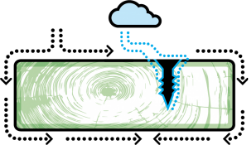
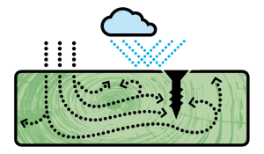
CUTEK® Extreme is a penetrating oil wood stabilizer designed to help control moisture from within the wood, rather than forming a coating on the surface.
Penetrates deep into the wood
CUTEK® Extreme soaks deep into the wood fibers, establishing protection from within rather than sitting on the surface.
Helps control moisture
By reducing moisture movement through the wood, CUTEK® Extreme helps improve dimensional stability and reduce the risk of warping, cupping and splitting.
Remains active inside the wood
CUTEK® Extreme stays mobile within the wood and can migrate into cuts, holes and damaged areas, continuing to support moisture protection where the wood is exposed.
No surface film
Because CUTEK® Extreme does not form a rigid surface film, there is no coating to peel or flake. Maintenance is simply clean and recoat, with no need to sand or strip under normal conditions.
Protection that works with the natural movement of wood, not against it.
CUTEK® EXTREME 0.95 US GALLON
Softwoods and hardwoods, smooth 400–800 ft2/US gal
Old restored wood sanded 250–350 ft2/US gal
New wood rough or band sawn 250–300 ft2/US gal
Old restored wood 150–250 ft2/US gal
Rough or band sawn
Shingles and shakes 84–212 ft2/US gal
CUTEK® EXTREME 5 US GALLON
Softwoods and hardwoods, smooth 400–800 ft2/US gal
Old restored wood sanded: 250–350 ft2/US gal
New wood rough or band sawn: 250–300 ft2/US gal
Old restored wood rough or band sawn: : 150–250 ft2/US gal
Shingles and shakes: 84–212 ft2/US gal
For the best result, CUTEK® Extreme needs to penetrate clean, dry, bare wood.
Preparation depends on the condition of your wood
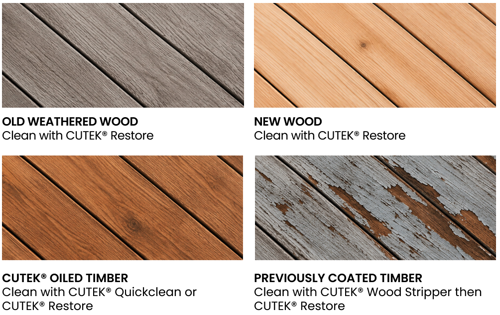
1–Before you apply
Wood moisture content must be below 17%. Allow the wood to dry completely after preparation.
2–Apply thin, even coats
Apply CUTEK® Extreme evenly with a brush or paint pad. Allow each coat to fully penetrate and dry before applying the next.
3–How do I know when it's ready for another coat
Press a clean tissue or rag firmly onto the surface. If there is no oil transfer, the wood is ready for the next coat.
4–Using CUTEK® Colortone?
Mix your chosen CUTEK® Colortone into CUTEK® Extreme before application. Always test the color on the actual wood first.
Always refer to the product label and Technical Data Sheet for complete application instructions.
With CUTEK® Extreme, maintenance is simple, fast, and cost effective. Extreme will not crack, peel or split, and your wood can be easily revived or restored using our Prepare and Protect system – no need to sand or strip.
Extreme should be reapplied when the wood is no longer beading water, or as frequently as necessary to retain the natural beauty and color of the wood.
If CUTEK® Colortone has been added, the color will gradually fade and weather over time. Recoat when the color has faded beyond your preferred appearance, or when the wood is no longer beading water. For more information, see the Colortone FAQ.
Due to the cumulative effect of Extreme, generally each maintenance coat will use less oil than the previous coat. As the protective properties build up inside the wood, the time between when recoats are required can extend.
Typically, horizontal exterior wood surfaces exposed to full weather such as decks and handrails will require recoating more frequently (initially after 6-12 months), while other surfaces such as vertical rough-sawn cladding will need recoating less often.
Downloads
FAQ Frequently Asked Questions
CUTEK® Extreme is a high-performance, penetrating oil wood stabilizer designed to protect wood from the inside out.
Rather than relying on a film sitting on the surface, Extreme penetrates and diffuses deeply into the wood, helping repel moisture and reduce moisture-related movement. This improves dimensional stability, helping minimize warping, cupping and splitting while extending the service life of the wood.
Because the protection is within the wood, Extreme is designed to gradually fade rather than crack, peel or flake - making long-term maintenance simple.
Many traditional wood coatings protect by creating a barrier or film over the surface of the wood.
CUTEK® Extreme takes a different approach. It penetrates and diffuses deeply into the wood, helping repel moisture and improve dimensional stability from within rather than relying on a surface film.
This means the natural grain and texture of the wood remain the focus, while maintenance is simplified because Extreme is designed to gradually fade rather than crack, peel or flake. When maintenance is needed, there is generally no need to sand or strip - simply prepare the wood and recoat.
It is a fundamentally different protection philosophy: rather than trying to make wood behave like something it isn't, CUTEK® Extreme is designed to work with the natural characteristics of wood and help it perform better for longer.
Wood is a natural material that is constantly responding to its environment. It absorbs and releases moisture as conditions change, causing it to expand and contract. Rather than trying to prevent this natural behavior by simply placing a barrier over the surface, CUTEK® takes a different approach: work with the wood and help manage one of the major causes of excessive movement - moisture.
Extreme is designed to penetrate and diffuse deeply into the wood, where it helps repel moisture and reduce moisture-related movement. This improves dimensional stability and helps minimize problems such as warping, cupping and splitting.
Importantly, Extreme doesn't simply penetrate the wood and stop. The oil remains mobile and active within the wood, continuing to move as the wood itself moves and changes. This means the protection isn't fixed in one place — it continues working from within throughout the life of the wood.
Protecting from within also means Extreme does not need to rely on a rigid film sitting on the surface of the wood. Traditional surface films can eventually be challenged as the wood beneath them moves and weathers. Extreme instead remains within the wood, helping protect it while allowing its natural grain, texture and character to remain part of the finished result.
Wood is constantly interacting with moisture in its environment. Moisture can come from rain, humidity, dew, condensation, wet ground, surrounding vegetation, and other sources of water exposure. Even when wood isn’t directly getting wet, changes in atmospheric humidity can cause it to absorb and release moisture.
As the moisture content of wood changes, the wood naturally expands and contracts. Repeated wetting and drying can contribute to dimensional movement such as warping, cupping and splitting, affecting the appearance, stability and long-term performance of the wood.
CUTEK® Extreme penetrates deeply into the wood to help repel moisture and reduce moisture-related movement. By helping moderate the movement of moisture into and out of the wood, Extreme improves dimensional stability and helps extend the service life of the wood.
Yes. One of the key functions of CUTEK® Extreme is wood stabilization.
By penetrating deeply into the wood and helping repel moisture, Extreme significantly reduces moisture-related movement such as warping, cupping and splitting. This helps the wood remain more dimensionally stable throughout its service life.
Wood is a natural material that responds to the environment around it. As temperature, humidity and moisture conditions change, wood naturally absorbs and releases moisture, causing it to expand and contract. We don't want to stop wood from behaving like wood - we want to work with its natural characteristics and help manage that movement.
Wood stabilization is about reducing excessive moisture-related dimensional movement. When that movement becomes significant or uneven, it can contribute to warping, cupping, splitting and other changes that affect the appearance, performance and service life of the wood.
CUTEK® Extreme is designed to work with the wood rather than against it. Instead of encapsulating the surface with a rigid film, it penetrates and diffuses deeply into the wood, helping repel moisture and significantly reduce moisture-related movement.
The result is wood that can retain its natural character while being more dimensionally stable, resilient and better equipped to perform over the long term.
Not in the traditional sense of sealing wood beneath a surface film.
Wood naturally responds to changes in moisture and its surrounding environment. CUTEK® Extreme is designed around that reality. Rather than relying on a film over the surface to isolate the wood from its environment, it penetrates and diffuses deeply into the wood, where it helps repel moisture and reduce moisture-related movement.
This internal protection helps improve dimensional stability while allowing the natural grain, texture and character of the wood to remain visible.
So while Extreme helps protect wood against moisture, “penetrating wood stabilizer” is a more accurate description than “sealer.”
CUTEK® Extreme is designed to penetrate and diffuse into the wood rather than form a traditional film over its surface.
That distinction matters because wood is constantly expanding and contracting as its moisture content changes. Extreme works within the wood to help manage moisture and improve dimensional stability rather than relying on a surface film as the primary means of protection.
It is also why correct application is important. Extreme should be applied in thin, even coats, allowing each coat to fully penetrate and dry before the next is applied. Too much product, wet wood, an existing coating that prevents penetration, or insufficient drying time between coats can leave excess oil at the surface instead of allowing it to move into the wood as intended.
CUTEK® Extreme is designed to gradually fade rather than peel, crack or flake as it weathers.
Why? Because its protection does not depend on maintaining a traditional film over the surface of the wood. Extreme penetrates and diffuses into the wood, helping repel moisture and improve dimensional stability from within.
This also changes what maintenance looks like. With a film-forming coating, deterioration of the surface can eventually require significant preparation before recoating. Extreme is designed so that routine maintenance generally does not require sanding or stripping - the wood is cleaned or prepared as required and a maintenance coat is applied.
For homeowners, builders and asset managers, that can make maintaining wood considerably simpler over its service life.
Unlike coatings that dry or cure into a fixed surface film, CUTEK® Extreme remains mobile and active within the wood.
That matters because wood doesn't stay unchanged. It naturally moves as environmental conditions change. It can develop cracks and checks, and throughout its life it may be cut, drilled, nailed or screwed.
When the wood is breached in these ways, Extreme moves within the wood toward the newly exposed area, helping restore resistance to moisture where the wood has been disrupted. This ongoing movement and protection is what we mean by Extreme's self-healing action.
Rather than relying on a perfect, unbroken surface coating, Extreme continues working from within - responding as the wood moves and changes throughout its life.
Wood changes. CUTEK® Extreme moves with it.
Yes. One of the important distinctions with CUTEK® Extreme is that the appearance of the wood and the protection within the wood are not necessarily the same thing.
Extreme penetrates and diffuses deeply into the wood, where the oil remains active and mobile. Rather than simply drying in place, it can continue to migrate within the wood, helping maintain resistance to moisture as the wood naturally moves, weathers and changes over time.
The surface appearance, however, will continue to respond to weather and UV exposure. For example, wood protected with clear Extreme can gradually lighten and develop a naturally silvered appearance while continuing to receive protection from the oil within the wood.
This gives customers a choice about aesthetics. Wood can be allowed to weather naturally, or CUTEK® Colortone can be used where maintaining or influencing the color of the wood is desired.
Yes. CUTEK® Extreme is designed to provide long-term, cumulative protection within the wood.
When Extreme is applied, the oil penetrates deeply into the wood and remains active within it, helping repel moisture and improve dimensional stability. Routine maintenance does not normally involve stripping that protection away and starting again. Instead, maintenance coats add to and replenish the protection already within the wood.
Over time, this means each maintenance coat builds on the CUTEK® protection already present rather than requiring the existing coating system to be removed and replaced.
This is one of the reasons Extreme should be thought of as a long-term wood protection system, rather than simply a finish applied for appearance.
CUTEK® Extreme is suitable for a wide range of wood types, including hardwoods, softwoods, modified and engineered wood products, and some bamboo (for bamboo applications, please read the Bamboo FAQ prior to proceeding).
Different woods can behave very differently. Species, density, porosity, age, moisture content, surface characteristics and the way the wood has been manufactured or modified can all influence how Extreme penetrates, performs and looks. Dense hardwood, for example, may accept oil very differently from a more porous softwood.
That is why we recommend testing Extreme on a representative sample area before beginning the whole project - particularly when working with an unfamiliar wood species or where appearance, penetration and drying time are important.
If you manufacture modified, engineered or emerging wood technologies, we encourage you to talk to CUTEK® Wood Solutions before specifying a protection system. Our technical and laboratory teams actively work with evolving wood technologies to understand how they behave and determine the most appropriate protection approach. Where required, we can evaluate the wood, its manufacturing or modification process and its intended exposure conditions to help identify - or develop - a solution designed to perform at its best.
Yes. CUTEK® Extreme can be used across a broad range of wood types, but the way the oil penetrates will vary depending on the characteristics of the wood.
Some dense hardwoods absorb oil relatively slowly, while more porous woods may absorb considerably more. Species, density, porosity, moisture content, age and surface condition can all affect penetration, drying time, coverage and final appearance.
The goal isn't to make every species behave or look the same. Wood is a natural material, and Extreme is designed to work with those differences.
Always test first so you understand how your particular wood will accept the oil.
Yes. Pressure treatment and moisture protection perform different jobs - and pressure-treated wood can still benefit significantly from moisture management.
Pressure treatment is designed to help protect wood against biological threats such as decay and insect attack, helping extend the service life of wood used in exterior applications. However, pressure treatment does not make wood water resistant. Pressure-treated wood can still absorb and release moisture as environmental conditions change.
That distinction is important. Much of the pressure-treated lumber used for decks, fences and outdoor structures is made from softwood species that can experience significant dimensional movement as their moisture content changes. As the wood repeatedly wets and dries, it can swell, shrink, cup, warp, twist, bow and split - even though the wood itself has been pressure treated.
CUTEK® Extreme addresses a different part of the wood-protection equation. It penetrates deeply into the wood, where it helps manage moisture movement and significantly improve dimensional stability. Rather than forming a hard surface film, Extreme remains active within the wood, working alongside the pressure treatment to help the wood perform better throughout its service life.
Importantly, you do not need to wait a year before protecting new pressure-treated wood with Extreme. Extreme can be applied before or after installation. What matters is understanding the condition of the wood and the finish you want to achieve — not simply how long the wood has been installed.
If you want the wood to naturally lighten and silver over time, Extreme can be used clear. If you want to maintain or influence the color of the wood and provide additional UV protection, add CUTEK® Colortone. When using Colortone, the wood must have a moisture content of 17% or less, as excess moisture can affect color development and lead to unwanted darkening or uneven results. Always test your selected Colortone first.
For homeowners and DIYers, there can be a real advantage in protecting pressure-treated lumber before repeated wetting and drying has already caused significant movement or distortion.
For pressure-treated lumber manufacturers, treaters and wood merchants, the opportunity begins even earlier. Extreme can be applied before installation, and CUTEK®-treated lumber can be wet stacked immediately, opening opportunities for factory or pre-coating programs as well as on-site application. CUTEK® can provide technical guidance to help integrate moisture-management protection into the way pressure-treated lumber is manufactured, supplied or recommended to customers.
Pressure treatment helps protect the wood from biological attack. Extreme helps manage the moisture that can cause it to move and distort. Together, they address two very different challenges facing exterior wood.
Yes. Decks are one of the many exterior wood applications suitable for CUTEK® Extreme.
Decking is particularly demanding because horizontal boards are exposed directly to rain, sunlight, foot traffic and changing environmental conditions. Extreme penetrates deeply into the wood to help repel moisture, improve dimensional stability and reduce moisture-related movement such as cupping, warping and splitting.
Because horizontal surfaces receive greater exposure, they will generally require maintenance more frequently than protected vertical surfaces. Fully exposed surfaces such as pool decks and handrails may initially require recoating after approximately 6–12 months, depending on the wood and conditions.
Yes. CUTEK® Extreme is suitable for exterior applications including weatherboards/siding, shingles, fascia and other exposed wood elements.
Vertical exterior wood faces different conditions from horizontal decking. It generally sheds water more readily and can experience less direct weather exposure, which is one reason vertical cladding may require maintenance less frequently than highly exposed horizontal surfaces.
Extreme can be used clear where natural lightening and silvering is desired, or with CUTEK® Colortone where maintaining or influencing the wood's color is part of the design intent.
Yes. CUTEK® Extreme is suitable for a wide range of exterior wood projects, including fences, posts, beams, pergolas and other outdoor wood structures.
These types of projects are particularly well suited to Extreme because the wood rarely remains untouched throughout its life. Boards are cut, drilled, nailed and screwed during construction, while natural movement and weather exposure can cause checking, cracking and other changes over time.
Unlike a surface coating that relies on maintaining an unbroken film, Extreme remains mobile and active within the wood. When the wood is cut, drilled, fastened, cracked or otherwise breached, the oil moves within the wood toward the newly exposed area, helping restore resistance to moisture where the wood has been disrupted. This ongoing movement and protection is what we mean by Extreme's self-healing action.
At the same time, Extreme helps repel moisture and reduce moisture-related movement, improving dimensional stability and helping minimize problems such as warping, cupping and splitting.
For outdoor structures that will continue to move, weather and change throughout their service life, Extreme provides protection designed to move with the wood - not simply sit on top of it.
Yes. Outdoor wood furniture is specifically included among the suitable uses for CUTEK® Extreme.
The penetrating protection helps the wood resist moisture and moisture-related movement while allowing its natural grain and texture to remain the focus.
As with any wood project, the furniture should be properly prepared, clean and dry before application, and a test area is recommended to confirm the final appearance and penetration.
Important: Extreme should not be used on surfaces intended for direct contact with food or food preparation.
Yes. CUTEK® Extreme is suitable for doors and exterior joinery, as well as shutters and garage doors.
Dimensional stability is particularly important for components such as doors and joinery because changes in moisture content can cause wood to expand, contract, warp or move. Extreme penetrates deeply to help repel moisture and reduce moisture-related movement within the wood.
Where components are being coated before installation, protecting accessible faces before assembly can also help establish protection early in the life of the wood.
Yes. CUTEK® Extreme is suitable for plywood and a wide range of engineered wood products.
Engineered wood is a rapidly evolving field, however, and not all products behave in the same way. Construction methods, wood species, adhesives, treatments, modification technologies, surface finishes and intended exposure conditions can all influence how a wood protection system penetrates and performs.
For standard applications, we recommend testing Extreme on a representative sample before coating the full project.
Decorative plywood requires particular care. On some plywood products with very thin face veneers, the deep penetration of Extreme may make underlying darker glue lines more visible. Plywood products also vary significantly in their construction and intended exposure, so always confirm that the plywood itself is suitable for the intended application and test Extreme on a representative sample first.
For manufacturers, architects, engineers or project teams working with engineered, modified or emerging wood technologies, we encourage you to talk to the CUTEK® Technical Team. Our technical and laboratory teams are actively interested in understanding new wood technologies and how best to protect them. We can work with you to understand the wood product, its manufacturing process, intended application and exposure conditions, and help identify - or where appropriate, develop - a protection solution designed to perform at its best.
Yes. CUTEK® Extreme is well suited to mass timber applications, including CLT, glulam and other engineered wood systems, and has been used on mass timber projects around the world.
Mass timber represents some of the most exciting developments in modern wood construction - but protecting these large, high-value wood elements requires an understanding of how the particular timber system will behave throughout manufacturing, transport, construction and long-term exposure.
Extreme penetrates into the wood to help repel moisture and improve dimensional stability rather than relying on a film over the surface. This makes it particularly valuable where maintaining the natural appearance and character of exposed timber is important, while helping manage moisture-related movement and support long-term performance.
For architects, engineers, mass timber manufacturers and project teams, we encourage you to involve the CUTEK® Technical Team early in your project. Our technical and laboratory teams can work with you to understand the timber system, manufacturing process, adhesives and treatments, exposure conditions, construction methodology and desired aesthetic to help determine the most appropriate protection approach.
CUTEK® has supported mass timber and engineered wood projects across a wide range of applications and environments. Explore our Case Studies to see CUTEK® in use on real-world projects, or contact our Technical Team to discuss your project.
Yes. Beams are specifically identified as a suitable application for CUTEK® Extreme.
Protecting exposed wood against moisture-related movement can be particularly valuable where wood is an important visual or functional part of a building. Extreme penetrates into the wood rather than hiding it beneath an opaque surface, allowing the grain, texture and natural character of the timber to remain visible.
For structural, engineered or large commercial projects, however, CUTEK® should form part of the overall project specification rather than being treated as a substitute for structural design, preservation requirements or other project-specific protection measures.
Yes. CUTEK® Extreme is designed for exposed wood and has very good resistance to both fresh and salt water, making it well suited to many demanding exterior environments.
In fact, CUTEK® was originally developed in New Zealand - an environment known for intense UV exposure, high rainfall, coastal conditions and rapidly changing weather. Protecting wood in these conditions requires more than simply dealing with rain; wood can be exposed to humidity, condensation, dew, salt-laden air and repeated cycles of wetting and drying.
These changing conditions matter because wood continually responds to the moisture in its environment. As its moisture content rises and falls, the wood expands and contracts - contributing over time to movement such as warping, cupping and splitting.
Extreme takes a different approach to protecting wood in these challenging environments. It penetrates deeply into the wood, helping repel moisture and reduce moisture-related movement from within. By improving dimensional stability, Extreme helps wood better manage the environmental conditions it will experience throughout its service life.
And because Extreme remains mobile and active within the wood, its protection isn't dependent on maintaining an unbroken surface film as the wood moves and weathers. It continues working from within as the wood responds to its environment.
However, water resistance does not mean permanent immersion. Extreme has very good resistance to fresh and salt water but is not suitable where the wood will remain continuously submerged.
Yes. Hot tubs are specifically included in the suitable applications for CUTEK® Extreme, and the product has very good resistance to fresh and salt water.
There is an important distinction, however: water exposure is not the same as permanent immersion. Extreme is not suitable for wood that will remain continuously submerged.
Pool and hot-tub areas can also expose wood to chemicals, cleaners and contaminated water. These may leave splash or spill marks on coated wood, so spills should be managed promptly and the product tested where unusual exposure is expected.
CUTEK® Extreme can be used to protect the exterior wood cladding of some sauna constructions, but it is not recommended for wood exposed to the internal sauna environment.
For layered or double-clad saunas, where the exterior cladding is separated from the internal sauna lining by insulation and an appropriate vapor barrier, Extreme can be used on the external cladding only. It penetrates deeply into the exterior wood to help repel moisture, improve dimensional stability and reduce moisture-related movement such as warping, cupping and splitting.
The construction of the sauna is important because Extreme is a deeply penetrating oil that remains mobile within the wood. In single-layer or single-clad construction, the oil may migrate through the wood and reach the interior surface.
For this reason, Extreme should not be applied where it could migrate into the hot, enclosed sauna environment. This includes applying it directly to internal sauna surfaces or to single-layer wood where the same timber forms both the exterior and interior surface.
If you are considering Extreme for the exterior of a sauna and are unsure about its construction, contact the CUTEK® Technical Team before application. We can help assess the wall construction and determine whether the proposed application is appropriate.
Yes. CUTEK® Extreme was designed to protect wood in some of the world's most demanding environments - it's where the name Extreme comes from.
From intense sun and heat to freezing temperatures, snow, high humidity, heavy rainfall and coastal exposure, wood can experience dramatically different conditions throughout its service life. Extreme was developed to provide long-term protection across these challenging environments by working with the wood rather than relying on a rigid surface film.
Extreme penetrates deeply into the wood, helping repel moisture and reduce the dimensional movement that can contribute to warping, cupping and splitting. Because the oil remains mobile and active within the wood, the protection can continue working as the wood moves, weathers and responds to changing environmental conditions.
However, there is an important distinction between the climate Extreme can perform in and the weather conditions in which it should be applied.
Temperature, humidity, weather, wood species, density, porosity and moisture content can all affect how Extreme penetrates and dries. Cold temperatures, for example, can thicken the oil and affect application and penetration.
So while Extreme is designed for wood exposed to demanding climates, it still needs to be applied under appropriate conditions to achieve the best result. See our application guidance for information about temperature, rain, humidity and dry-weather requirements.
Yes. CUTEK® Extreme can be used on many exterior bamboo applications, but bamboo behaves very differently from wood and requires a higher level of care, monitoring and maintenance.
Although bamboo is often used as an alternative to hardwood for exterior decking and other applications, bamboo is a grass, not a wood. It is highly hygroscopic, meaning it can absorb moisture rapidly and also dry very quickly - particularly when exposed to direct sun. These rapid changes in moisture can make exterior bamboo particularly susceptible to surface erosion, splitting, checking, graying and black staining molds.
This presents a significant challenge for any protective coating. Through many years of testing, observation and user feedback, CUTEK® has found that coatings which may perform reasonably well on wood for 6–12 months can deteriorate on some fully weather-exposed bamboo products in a fraction of that time.
Extreme's penetrating approach makes it particularly useful for exterior bamboo because it helps repel moisture and manage moisture-related movement from within rather than relying on a surface film. However, the quality and construction of the bamboo itself matters enormously. There are many engineered bamboo products on the market with widely varying manufacturing methods and performance characteristics, and CUTEK® has observed that some are simply not well suited to full weather exposure, regardless of the protection system applied.
For best results, exterior bamboo protected with Extreme should be inspected regularly and maintained as soon as signs of mold staining, surface erosion or splitting appear. Depending on the bamboo product and its exposure, maintenance may be required more frequently than it would be for conventional wood.
For new bamboo that has not been factory pre-coated, CUTEK® recommends coating all sides before installation, followed by the appropriate additional coats after installation. Factory pre-coated bamboo should also receive a further thin coat shortly after installation. When CUTEK® Colortone is being used, additional coats may be required to achieve adequate and even color coverage.
Strand-woven bamboo requires particular care. The adhesives used in its manufacture can vary considerably, and Extreme cannot penetrate glue where it forms a physical barrier. Some strand-woven products can also experience significant surface expansion and roughening when exposed to weather. Where this occurs, appropriate surface preparation may be required before recoating.
Clear Extreme can be used where a naturally weathered appearance is desired, while CUTEK® Colortone can be added where greater color retention or a particular aesthetic is required.
Because engineered bamboo products vary so significantly, we strongly recommend testing on a representative sample and contacting the CUTEK® Technical Team when considering Extreme for an engineered bamboo product, particularly for commercial, large-scale or fully weather-exposed applications.
Important information about bamboo
CUTEK® Wood Solutions provides its bamboo application recommendations in good faith based on testing, observation and user experience. However, because engineered bamboo products vary significantly in their raw materials, manufacturing processes, quality control, preservative treatments, adhesives and other factors outside CUTEK®'s control, CUTEK® does not offer a warranty or performance guarantee for the use of CUTEK® products on any bamboo substrate, including in relation to coating longevity, mold or fungal degradation, splitting or delamination.
Some bamboo manufacturers or distributors may independently specify CUTEK® products for use with their engineered bamboo products. Any warranty or performance representation made by that manufacturer or distributor is independent of CUTEK® Wood Solutions and does not mean CUTEK® is a party to, or provides, that warranty or guarantee.
Yes. CUTEK® Extreme can be used on acetylated wood, but because acetylated wood behaves differently from conventional wood, we recommend testing before proceeding with the full project.
Acetylation chemically modifies the wood to change some of its performance characteristics. As part of that process, residual acid may remain within the wood, which can affect how Extreme interacts with the substrate and may influence the final result.
For this reason, results can vary between acetylated wood products and applications, and CUTEK® cannot guarantee a specific coating result on acetylated wood.
Before beginning your project, apply Extreme to a representative test area and assess the penetration, drying and finished appearance.
For commercial projects, manufacturers, architects, specifiers or anyone working with a particular acetylated wood system, we encourage you to contact the CUTEK® Technical Team. We can help review the specific product and intended application and provide technical guidance before the protection system is specified or applied.
No. CUTEK® Extreme has very good resistance to fresh and salt water, but it is not suitable for permanent immersion.
That means it can be suitable for many wood surfaces exposed to rain, splashing and weather, but it should not be specified for applications where the treated wood will remain continuously submerged.
No. CUTEK® Extreme is not suitable for food preparation surfaces.
For cutting boards, countertops or other wood surfaces intended for direct food preparation, use a product specifically designed and approved for that purpose.
CUTEK® Extreme can be used on exterior wood structures where minor or incidental ground contact may occur, but it is not designed as an in-ground wood protection or preservation system.
There is an important distinction between a deck, fence or other outdoor structure where a small part of the wood may contact the ground, and wood that is intentionally installed into the ground or designed to remain in continuous contact with soil.
In-ground wood is exposed to a very different environment. Persistent soil moisture and biological exposure require wood to have the appropriate ground-contact preservative treatment or protection system for its intended use. Extreme should not be used as a substitute for that protection.
For example, Extreme can still be used to protect the suitable above-ground components of decks, fences, pergolas and other exterior structures, including projects where incidental ground contact may occur. However, a post being installed into the ground should have the appropriate ground-contact treatment or protection independently of Extreme.
If you're unsure whether your project is considered ground-contact or whether the wood has been appropriately treated for its intended use, contact the CUTEK® Technical Team before application.
Yes. CUTEK® Extreme can be used on wood shingles and shakes, provided the roof is not being used to collect rainwater for drinking.
Its penetrating protection can help manage moisture and improve the dimensional stability of exterior wood, making it suitable for exposed wood roofing applications.
If your roof forms part of a drinking-water collection system, Extreme is not suitable for that application.
For unusual roofing systems or where you're unsure about compatibility with other roofing materials, contact CUTEK® Technical Support before application.
No. CUTEK® Extreme and preservative wood treatments perform different roles in protecting wood.
Extreme is designed to penetrate deeply into wood to help repel moisture, improve dimensional stability and reduce moisture-related movement such as warping, cupping and splitting.
Wood-preservation treatments may be used to protect wood against biological threats or other hazards according to the treatment system and intended end use. Extreme is not intended to replace licensed wood-treatment or preservation processes.
In many applications, the two approaches can be complementary rather than competing. Pressure-treated wood, for example, can still benefit significantly from the moisture-management and dimensional-stability protection provided by Extreme.
If you are unsure what treatment or protection your wood requires for its intended environment, contact the CUTEK® Technical Team for guidance.
Yes. CUTEK® Extreme needs direct access to the wood so it can penetrate and protect from within.
Before you begin, the wood should be:
Bare - free from paint, varnish, stain or other coatings that may prevent penetration.
Clean - free from dirt, grease, grime, mold staining and other contamination.
Dry enough to accept Extreme - we'll cover the specific moisture requirements separately.
What you need to prepare the wood will depend on its current condition:
Dirty or grimy? Clean it with CUTEK® Quickclean.
Weathered or stained? Revive it with CUTEK® Wood Reviver.
Existing coating? Remove it with CUTEK® Wood Stripper, then use Wood Reviver for best results.
You may also need a stiff-bristle brush, appropriate rinsing equipment and protective equipment for the preparation product you're using. Always follow the relevant product label, TDS and SDS.
Once the wood is bare, clean and appropriately dry, you're ready to move on to Extreme.
CUTEK® Extreme needs to be able to penetrate directly into the wood to work as intended. Whether an existing coating or treatment needs to be removed therefore depends on whether it is preventing the wood from freely absorbing the oil.
If the wood has a film-forming coating such as paint, varnish, polyurethane or another coating that prevents penetration, it needs to be removed before applying Extreme. Use CUTEK® Wood Stripper to remove the existing coating, followed by CUTEK® Wood Reviver for best results.
If the wood has been pre-oiled, pre-coated or previously treated with an unknown product, it may not be obvious whether the existing treatment is still affecting absorption. A simple water droplet test can help.
Flick a few drops of clean water onto several representative areas of the wood:
If the water readily absorbs into the wood, the surface is likely able to accept Extreme.
If the water beads or remains sitting on the surface, an existing treatment or surface condition may be preventing absorption, and further preparation may be required.
Test several areas, particularly on weathered or previously treated wood, as an existing coating may have worn unevenly.
If the previous coating was CUTEK® Extreme, that's different. One of the benefits of Extreme is that routine maintenance generally does not require the previous Extreme application to be sanded or stripped away. Appropriately clean and prepare the wood before applying the next maintenance coat.
If you don't know what has previously been applied, the water test produces inconsistent results, or you're working on a significant or unusual project, contact the CUTEK® Technical Team for guidance before proceeding.
Note: The water droplet test checks whether the surface can absorb liquid. It does not tell you whether the wood is sufficiently dry to coat. If moisture is a concern, use a moisture meter separately to check the moisture content of the wood.
Not necessarily. CUTEK® Extreme does not require sanding as a standard application step.
For a first application, what matters is that the wood is bare, clean, appropriately dry and able to accept the oil. Sanding may be useful where the surface itself needs correcting - for example, to remove damaged or rough wood fibers, surface defects or other conditions that could affect the finished result. If sanding is required, remove all sanding dust and contamination before applying Extreme.
For future maintenance coats of Extreme, one of the major benefits of the system is that you generally do not need to sand or strip the previous Extreme application. Because Extreme penetrates into the wood rather than building a film that needs to be removed, maintenance is typically a matter of appropriately cleaning and preparing the wood before applying a further thin coat.
That’s one of the reasons Extreme becomes particularly simple to maintain over the life of the wood - you aren't starting the protection system again each time you recoat it.
No. New wood does not need to be left outside to weather before applying CUTEK® Extreme. Once the wood is ready to accept the oil and has been appropriately prepared, Extreme can be applied without waiting for it to weather.
First, inspect the wood. If it simply needs general cleaning, use CUTEK® Quickclean. If the wood has mill glaze, or tannin, water or iron staining, use CUTEK® Wood Reviver to prepare the surface.
A simple way to check whether the surface is ready to accept Extreme is to perform a water droplet test. Flick a few drops of clean water onto the wood:
If the water readily absorbs into the wood, the surface is likely open enough to accept Extreme.
If the water beads or remains sitting on the surface, something may be preventing absorption and further preparation may be required.
This simple test can help identify issues such as mill glaze or an existing surface treatment that may not be obvious just by looking at the wood.
Allow the wood to dry appropriately after preparation before applying Extreme.
For unfamiliar wood species, modified or engineered wood products, always test a representative area first.
Start by looking at the condition of the wood.
If the wood is dirty or grimy but otherwise in good condition, clean it with CUTEK® Quickclean.
If it has weathered, grayed or developed tannin, water or iron staining, CUTEK® Wood Reviver can help restore the wood and prepare the surface for CUTEK® Extreme.
If an old coating is still present, that coating may need to be removed first with CUTEK® Wood Stripper.
You don't need to make old wood look new - you need to make sure Extreme can properly access and penetrate the wood.
Clean enough for the oil to penetrate directly and evenly into the wood.
The surface should be free from dirt, grease, grime and other contamination that could interfere with penetration or affect the finished appearance.
Don't assume that because wood looks clean, it is ready to coat. New and old wood can both carry contaminants or staining that need to be addressed first.
Choose the appropriate CUTEK® preparation product for the condition of the wood, rinse as directed, and allow the wood to dry appropriately before applying CUTEK® Extreme.
CUTEK® Extreme should be applied to clean, dry wood. The CUTEK® Extreme Technical Data Sheet (TDS) specifies a maximum wood moisture content of 17% before application.
For professional, commercial or specification work - or whenever moisture levels are uncertain - a wood moisture meter is the most reliable way to confirm that the wood is ready to coat.
For a typical home project, the important thing is to allow the wood to dry thoroughly before applying Extreme, particularly after rain, cleaning or pressure washing. Remember that wood can feel dry on the surface while still holding moisture within.
If the wood has recently been wet, conditions have been cool or humid, or you're simply unsure whether it has dried sufficiently, give it more time to dry before coating.
Applying Extreme to wood with excessive moisture can interfere with penetration and drying and may affect the appearance and performance of the finished result.
Address the contamination before applying CUTEK® Extreme.
Don't simply coat over visible mold, mildew, fungal growth or associated staining. The wood needs to be appropriately cleaned and prepared first.
The correct treatment depends on what is actually present. CUTEK® Quickclean can remove general surface contamination, while CUTEK® Wood Reviver can help address weathering and mold or fungal staining only. These products should not be represented as a substitute for a treatment specifically intended to kill active biological contamination.
If you're unsure what you're dealing with - particularly where growth is extensive or repeatedly returns - identify and address the underlying moisture conditions before coating.
Yes. Anything that prevents CUTEK® Extreme from either reaching the wood or absorbing into it can affect the finished result.
Adhesives, silicone, sealants, fillers and other construction materials may create areas where the oil cannot penetrate normally. They may also interact differently with oil than the surrounding wood.
Where these products are present, check their compatibility and application requirements and test the complete system before proceeding - particularly on architectural joinery, engineered wood or commercial projects.
If you're working with an unusual material combination, contact the CUTEK® Technical Team for project-specific guidance.
For complete step-by-step instructions, refer to the CUTEK® Extreme label and Technical Data Sheet (TDS), or visit our Application Videos for practical demonstrations of how to prepare, apply and maintain CUTEK® products.
Extreme works differently from a traditional surface coating. It is designed to penetrate deeply into the wood, so thin, even coats are important. Allow each coat to fully penetrate and dry before applying the next.
For an easy way to remember the basics:
Thin coat. Warm day. CUTEK® Colortone - or it goes gray.
Thin coat - Extreme is a penetrating oil. More product on the surface doesn't mean better protection; apply thin, even coats and allow the oil to penetrate.
Warm day - Warm, dry conditions help Extreme penetrate and dry. Always consider the weather and required dry-weather window before you begin.
CUTEK® Colortone - or it goes gray - Extreme Clear oil protects the wood from within while allowing it to naturally lighten and silver with UV exposure. Add Colortone if you want to maintain or change the wood's color and add UV protection.
For anything beyond the basics, watch our Application Videos or contact the CUTEK® Technical Team for advice on your project.
CUTEK® Extreme is designed to penetrate into the wood, not build up on the surface. Applying more product at once does not mean more protection.
Thin, even coats allow Extreme to penetrate and diffuse into the wood as intended. Applying too much product can leave excess oil sitting on the surface, resulting in a greasy or tacky finish and longer drying times.
Allow each coat to fully penetrate and dry before applying the next. The wood should feel dry and non-greasy before recoating.
Remember:
Thin coat. Warm day. CUTEK® Colortone - or it goes gray.
For full application instructions, refer to the Extreme label, Technical Data Sheet (TDS) or our Application Videos.
Rather than maintaining CUTEK® Extreme according to a fixed schedule, look at how the wood is behaving.
One of the simplest ways to check is the water droplet test. Flick a few drops of clean water onto the wood:
If the water beads on the surface - the wood is not yet readily accepting more oil.
If the water absorbs into the wood - the Extreme closer to the surface has migrated deeper into the wood and the wood is able to accept more oil. This is a good indication that a maintenance coat can be applied.
Importantly, this does not mean the previous Extreme has disappeared or stopped protecting the wood. Extreme remains within the wood, where it continues to help repel moisture and improve dimensional stability. A maintenance coat replenishes the oil closer to the surface while adding to the protection already within the wood.
Color is another useful indicator. If your CUTEK® Colortone has faded and you would like to refresh or maintain the color, it may also be time for a maintenance coat.
How frequently maintenance is required will vary depending on the wood, exposure, orientation, climate and desired appearance. Horizontal, fully exposed surfaces will generally require attention sooner than sheltered or vertical wood.
Don't recoat CUTEK® Extreme simply because a set number of hours has passed. The previous coat should be fully penetrated and the surface should be dry and non-greasy before applying another coat.
Drying and penetration times vary depending on the wood species, density, porosity, age and moisture content, as well as temperature, humidity and weather conditions.
A dense hardwood, for example, may accept the oil differently from a more porous softwood. The second coat can also take longer to penetrate than the first because the wood has already absorbed oil.
Let the wood tell you when it's ready. If the surface still feels oily or greasy, give Extreme more time to penetrate and dry before applying another coat.
The first coat is being applied to bare, absorbent wood and can often penetrate relatively quickly. By the time the second coat is applied, the wood has already absorbed CUTEK® Extreme, so additional oil can take a little longer to migrate into the wood.
Wood species, density, porosity, moisture content, temperature, humidity and the amount of product applied can all influence drying time.
Don't apply another coat until the existing coat has fully penetrated and the surface feels dry and non-greasy.
If Extreme remains excessively oily or tacky for an extended period, rather than simply taking longer than expected, refer to our troubleshooting guidance or contact the CUTEK® Technical Team.
Yes. CUTEK® Extreme can be applied using a roller or sprayer, but because it is designed to penetrate into the wood rather than build up on the surface, controlling the amount of product applied is important.
Whichever application method you use, the goal is the same: apply thin, even coats that the wood can readily absorb. Avoid flooding the surface or applying more product than the wood can accept.
For typical on-site or DIY applications, a brush or paint pad makes it particularly easy to control the amount of product being applied. If using a roller or sprayer, take extra care to avoid over-application.
Using a machine applicator, pre-oiler or spray line?
CUTEK® Extreme works extremely well with automated and factory pre-oiling systems, including roller applicators and spray lines. We also manufacture specialized Machine versions of CUTEK® products designed specifically for these application methods.
For wood manufacturers and industrial applicators, we'd love to understand your operation rather than simply give you generic advice. Our team can work with you to understand your wood, equipment, production process and desired outcome, and help determine the most appropriate CUTEK® product and application method.
Plan your project for a period of warm, dry weather and allow sufficient dry conditions after application for CUTEK® Extreme to penetrate and diffuse into the wood.
As a general guide, the current Technical Data Sheet (TDS) recommends 2–3 days of dry conditions after coating to facilitate full penetration and an even finish.
If rain occurs before Extreme has sufficiently penetrated, it may affect the appearance or performance of the finished surface.
Weather conditions can change drying and penetration times, so don't rely on the forecast alone - consider the temperature, humidity, wood and how quickly the product is being absorbed.
Yes. CUTEK® Extreme can be applied across a wide range of temperatures, but temperature affects how quickly the oil penetrates into the wood.
On hot days, Extreme is particularly DIY-friendly. Because it penetrates into the wood rather than drying as a film on the surface, you don't have the same concern about maintaining a wet edge to avoid lap marks that you can have with many traditional coatings. Hot conditions also help the oil penetrate into the wood - just remember to apply thin, even coats and only as much as the wood can absorb.
On cold days, the oil becomes thicker and more viscous. This can actually make it easy to control during application, but it will generally penetrate into the wood more slowly.
If the oil is too cold and thick, try warming the closed can before you start. You can stand it in a bucket of hot water or leave it in the sun for a while to gently warm the oil and reduce its viscosity. Never use a flame or direct heat source.
Whatever the temperature, let the wood guide you. Allow each coat to fully penetrate and dry before applying another, and consider the wider weather forecast - particularly rain and humidity - before starting.
Yes - and where possible, applying the first coat before installation is a great way to protect the wood.
Pre-oiling allows CUTEK® Extreme to be applied to all sides of the wood, including faces, edges and areas that may become difficult or impossible to access once installed. The wood does not need to be left outside to weather first - it simply needs to be appropriately prepared and ready to accept the oil.
Buying new wood for your project? Ask your local wood supplier whether they offer CUTEK® pre-oiled wood. Having the first coat professionally applied before the wood reaches your project can save time on site while ensuring all sides receive that important initial application. After installation, follow the Extreme application instructions for the appropriate subsequent coat to the exposed surfaces.
Are you a wood manufacturer, mill, merchant or supplier? Offering CUTEK® pre-oiling can be a great way to add value to your wood and help customers protect it from the beginning. Extreme works extremely well with factory pre-oiling systems, and we have Machine products specifically designed for automated roller and spray-line application.
We'd love to understand your operation and help you explore what's possible — from selecting the right product through to setting up or optimizing your pre-oiling process.
Always take care with oily rags and other oil-soaked materials - if they are not handled correctly, they can cause combustion fires.
After using CUTEK® Extreme, immediately spread oily rags and other oily materials out flat somewhere outdoors to dry, in a well-ventilated area above 39°F (4°C). Do not leave oily rags bundled, folded or piled together.
Alternatively, wash oily materials thoroughly with water and detergent, then rinse. Remove oil from clothing, tools, rags and any other materials that have come into contact with Extreme. Dispose of wash water in accordance with local regulations.
Brushes and application equipment can be cleaned with mineral spirits or soap and water.
For complete safety, handling and disposal information, always refer to the current Extreme label, Technical Data Sheet (TDS) and Safety Data Sheet (SDS).
Pro Tip: If you have a brush that you only use for Extreme, some contractors simply wrap the brush tightly in plastic wrap (Saran Wrap) between applications rather than cleaning it every time. Because Extreme does not harden into a film, the oil can remain in the brush without drying solid and ruining the bristles.
Just make sure the brush is wrapped securely and stored safely until next use.
CUTEK® Extreme works differently from a traditional wood coating, so its protection isn't best understood as lasting for a fixed number of years.
Once Extreme penetrates into the wood, the oil remains there, mobile and working from within. It doesn't harden into a film that eventually cracks, peels or flakes away. Instead, it continues to help repel moisture, improve dimensional stability and protect the wood as it moves, weathers and changes.
Over time, some of the oil closer to the surface migrates deeper into the wood, eventually creating capacity for the wood to absorb more. That's when a maintenance coat can replenish the oil closer to the surface.
A simple way to check is the water droplet test. Flick a few drops of clean water onto the wood:
Water beads? The wood is not yet readily accepting more oil.
Water absorbs? The wood has capacity to accept more Extreme and it may be time for a maintenance coat.
Importantly, water beginning to absorb doesn't mean the Extreme already inside the wood has disappeared or stopped working. The oil remains mobile within the wood, continuing to provide internal moisture protection and helping redistribute toward newly exposed areas if the wood is cut, drilled, fastened or develops checks or cracks.
Extreme protection is also cumulative. Each appropriately timed maintenance coat adds more oil to the protection already within the wood - you're not stripping away the old protection and starting again.
But that doesn't mean more coats now = more protection now. Wood can only absorb so much oil at a time, and different types of wood asbsorb oil at different rates. Apply thin coats and allow each coat to fully penetrate and dry before adding more. Add more oil when the wood is ready to accept it.
If you've added CUTEK® Colortone, appearance may determine your maintenance timing too. Exposure to the elements, plus general wear, will gradually fade the color, particularly on highly exposed surfaces. You may choose to apply a maintenance coat to refresh the Colortone even if your primary reason for recoating is appearance rather than the wood's immediate need for more oil.
How often that happens will depend on the wood, exposure, orientation, climate and the appearance you want to maintain. The wood - and your desired color - will tell you when it's time.
No - No sanding. No stripping. No starting again.
That’s one of the biggest advantages of maintaining wood with CUTEK® Extreme.
Because Extreme penetrates into the wood rather than forming a film on the surface, there is no old coating layer to strip or sand away when it’s time for maintenance. The protection already within the wood stays there - you simply prepare the surface for more.
Look at the condition of the wood:
Dirty or grimy? Clean it with CUTEK® Quickclean.
Weathered, stained or heavily silvered and you want to restore its appearance? Revive it with CUTEK® Wood Reviver.
Already clean and looking good? Make sure it’s dry and ready to accept more oil.
Then apply a thin maintenance coat of Extreme when the wood is ready to absorb it.
You’re not removing the old protection and starting again. You’re adding to the Extreme already working within the wood.
That’s the beauty of the system: maintenance is simple, quick and easy.
Don’t worry - you haven’t missed your chance to maintain it.
Even if the surface has weathered, silvered or the color has faded, remember: the CUTEK® Extreme that previously penetrated into the wood is still there, working from within. Maintenance is about preparing the surface and adding more protection where the wood is ready to accept it.
The most important first step is to remove accumulated dirt and grime. From there, what you do depends largely on how you want the wood to look:
Happy with the natural silvered look? Clean the wood thoroughly with CUTEK® Quickclean, allow it to dry, and apply Extreme clear when the wood is ready to accept more oil. You can continue protecting the wood while keeping its naturally weathered appearance.
Has your CUTEK® Colortone faded unevenly or become patchy? Quickclean can help remove excess or loosely held pigment from the surface, giving you a more even starting point before refreshing your Colortone.
Want to bring back more of the wood’s natural color? CUTEK® Wood Reviver can help remove weathering and restore the appearance of the wood before recoating. If you want to maintain that freshly revived color, apply Extreme with Colortone to provide UV protection and slow the return to natural silvering. If you use Extreme Clear on its own, the wood will naturally begin to silver again over time.
Want to change the look altogether? You can prepare the wood appropriately and choose a different Colortone for the next stage of its life.
The great thing about CUTEK® is that you have options. Silver it, revive it, refresh the color or change the look - maintenance doesn't mean stripping everything off and starting again.
Clean the wood, decide how you want it to look, and go from there.
Different parts of the same project can reach their maintenance point at different times.
CUTEK® Extreme is first and foremost a moisture management system, so all treated wood will need to be monitored and maintained over its life. However, sun, rain, orientation, shelter and foot traffic can all influence how quickly different areas are ready for more oil - and, when using CUTEK® Colortone, how quickly the color changes.
Imagine a wraparound porch with steps. The steps and one side might receive full sun, rain and regular foot traffic, while another section sits permanently undercover and rarely sees direct sunlight. The exposed areas may need maintenance sooner, particularly to maintain their color, while the sheltered areas may not yet be ready to accept another coat.
You don't need to recoat the entire project every time one area reaches its maintenance point. Use the water droplet test and the appearance of the wood to assess different areas independently. Maintain each area when it is ready, while continuing to monitor the rest of the project over time.
This is particularly important if you're trying to achieve a naturally silvered look. Wood needs exposure to UV and weather to silver naturally, so sheltered areas may remain closer to their original color while exposed areas turn gray. If you know your project will have areas that are unlikely to weather evenly, using a gray-toned Colortone from the beginning can help create a more consistent weathered appearance across the project.
If you're unsure how different areas of your project are likely to weather - or how best to achieve the look you want - reach out to our friendly CUTEK® Technical Support team. We'd love to understand your project, its exposure and the result you're trying to achieve, and help you work out the best approach.
The goal is to give each part of your wood the maintenance it needs, when it needs it - rather than unnecessarily treating the entire project on the same schedule.
Don’t panic - it usually means the wood hasn’t fully absorbed the oil yet.
CUTEK® Extreme is designed to penetrate into the wood rather than dry as a coating on the surface. If the surface remains oily or tacky for longer than expected, the first thing to do is stop and give it time - don’t apply another coat.
A few things can slow penetration:
Too much oil was applied. Wood can only absorb so much at once, which is why thin coats are important.
The wood is particularly dense or naturally less absorbent. Some species simply take longer to accept oil.
It’s cold or humid. Cooler temperatures can make the oil more viscous and slow its movement into the wood.
The wood already contains plenty of Extreme. This can happen with subsequent coats or maintenance applications when the wood wasn't yet ready for more.
Something is preventing penetration. An existing coating, surface contamination or other treatment may be stopping the oil from getting into the wood.
Give the wood time before trying to fix anything. If there is obvious excess oil sitting on the surface that is clearly not going to penetrate, wipe it away with a clean rag rather than allowing it to remain there. Remember to handle oil-soaked rags safely.
If the surface is still unusually oily or tacky after allowing plenty of time for penetration, take a few photos and contact our Technical Support team before sanding, stripping, cleaning or applying anything else. Tell us what wood you're working with, how you prepared it, how much Extreme you applied and the conditions since application.
We'd much rather help you understand what is happening before you do work that may not be necessary.
Wood is a natural material, and different parts of the same piece can absorb CUTEK® Extreme differently.
Differences in grain, density, porosity, age, weathering and previous exposure can all affect how quickly and how much oil the wood absorbs. This can temporarily make some areas appear darker, richer or more oily than others, particularly soon after application.
If you're using CUTEK® Colortone, differences in absorption can also affect how strongly the color appears. Rougher or more absorbent areas may take up more pigment, while denser or smoother areas may appear lighter.
Before trying to correct anything, give Extreme time to fully penetrate and allow the appearance to settle.
If the difference remains noticeable, think about whether something else could be influencing absorption:
Was the wood prepared consistently across the whole area?
Are some sections newer, more weathered or more heavily sanded than others?
Could an old coating, oil or surface contamination remain in some areas?
Was the wood equally dry throughout?
Was the product, particularly if using Colortone, thoroughly mixed and kept mixed during application?
If you're unsure, don't immediately add more oil to the lighter areas to try to make them match. The wood may not be ready to absorb it.
Take a few photos and contact our Technical Support team. We can help work out why the variation has occurred and the simplest way to achieve the result you want.
Wood variation is normal. Our job is to help you understand what you're seeing and what - if anything - you need to do about it.
Dark or black marks don't necessarily mean there is a problem with CUTEK® Extreme - wood can discolor for several different reasons, and identifying the cause is the first step.
One common cause is a reaction between iron and the natural tannins in wood. Even small amounts of iron contamination - from metal filings, fertilizers, tools, fasteners or other sources - can react with tannin-rich wood and create dark gray or black staining.
Other possibilities include water staining, dirt or contamination, mold or other biological growth, so it's worth understanding what you're looking at before trying to remove it.
Don't immediately sand over it or apply another coat to hide it. Depending on the cause, that may not solve the problem.
Take a few clear photos of the affected area and consider what happened before the marks appeared - including recent construction work, metal contact, moisture exposure, cleaning products or other chemicals used nearby.
If you're not sure what caused the discoloration, contact our Technical Support team before treating it. We can help you identify the likely cause and recommend the most appropriate way to correct it.
Different types of discoloration need different solutions - identifying what caused the mark can save you a lot of unnecessary work.
Don't worry - your project is still salvageable. CUTEK® Extreme is designed to penetrate into the wood, not build up on the surface, so if too much is applied, you may simply have excess oil sitting on the surface.
First, don't apply another coat. Give the oil time to penetrate. Dense or less absorbent wood may take longer, and cool or humid conditions can also slow the process.
If it becomes clear that the excess oil is not going to penetrate, remove it from the surface with a clean rag rather than allowing it to remain sitting on the wood. Remember to handle and dispose of oil-soaked rags safely in accordance with the product safety instructions.
For your next coat, remember: thin is better. Apply Extreme in thin, even coats and allow each coat to fully penetrate and dry before applying more. Heavy coats won't provide better protection - they can simply make it harder for the oil to penetrate and dry as intended.
Remember: Thin coat. Hot day. CUTEK® Colortone - or it goes gray.
Act quickly. The easiest time to remove CUTEK® Extreme from an unintended surface is before the oil has had time to penetrate or spread.
If you spill or splash Extreme:
Wipe up excess product immediately rather than allowing it to sit or spread.
Avoid rubbing the oil over a larger area while trying to clean it up.
Be particularly careful around porous surfaces such as concrete, masonry and some paving, where oil can penetrate and cause discoloration.
Protect adjacent surfaces before application wherever possible, particularly when working above finished paving, masonry or other absorbent materials.
Different surfaces may require different cleaning methods, so don't reach for a strong solvent or chemical cleaner without checking that it's suitable for the affected material. The wrong cleaner can sometimes cause more damage than the original spill.
If Extreme has already penetrated a porous surface or you're unsure how to safely remove it, take a photo and contact our Technical Support team. Tell us what surface is affected and approximately how long the product has been there, and we'll help you determine the best next step.
Quick action gives you the best chance of an easy cleanup.
CUTEK® Extreme remains mobile within the wood - it’s an important part of how the product continues working from within.
In some circumstances, that mobility can also mean small amounts of oil or pigment migrate through the wood and become visible somewhere you weren’t expecting. This could be on another face of the wood or, occasionally, on a porous adjoining material that is in direct contact with it, such as concrete or masonry.
If you notice this, don’t panic or immediately try to seal over it. Wipe away any accessible excess oil where appropriate and take a few photos showing where Extreme was applied and where the oil or color has appeared.
Then contact our Technical Support team. Understanding the wood, adjoining materials and how the project has been constructed will help us work out what has happened and recommend the simplest next step.
The mobility of Extreme within the wood is one of the things that makes the system unique. If that movement creates an unexpected result on your project, we’re here to help.
Before you sand, strip, clean, recoat or try to fix it - take a few photos and get in touch with us.
Wood is a natural material, and unexpected results can have many different causes. Wood species, moisture, previous treatments, preparation, application, weather, exposure and even other materials used on the project can all influence what you're seeing.
The more information you can give our Technical Support team, the easier it is for us to help. If possible, send us:
Clear photos of the affected area, including some showing the wider project.
The wood species, if you know it.
Which CUTEK® products and CUTEK® Colortone you used.
How the wood was prepared.
Approximately when and how the product was applied.
Anything unusual about the weather, exposure or previous treatment of the wood.
Most importantly, don't make more work for yourself until we understand what's happening. Sometimes the best solution is surprisingly simple.
Our Technical Support team would love to understand your project, work through the problem with you and help you find the best way forward.
Not sure? Ask us. That’s what we’re here for.
CUTEK® RESOURCE CENTRE
Product guides, how-to advice, color tools and project inspiration to help you choose the right CUTEK® products and get the best result from your wood.
CUTEK® COLORTONE
Exterior wood exposed to sunlight naturally fades and silvers over time, changing its color and appearance.
CUTEK® Colortone is mixed with CUTEK® Extreme to add transparent color and UV protection, helping slow fading and silvering while allowing the natural grain and character of the wood to remain visible.
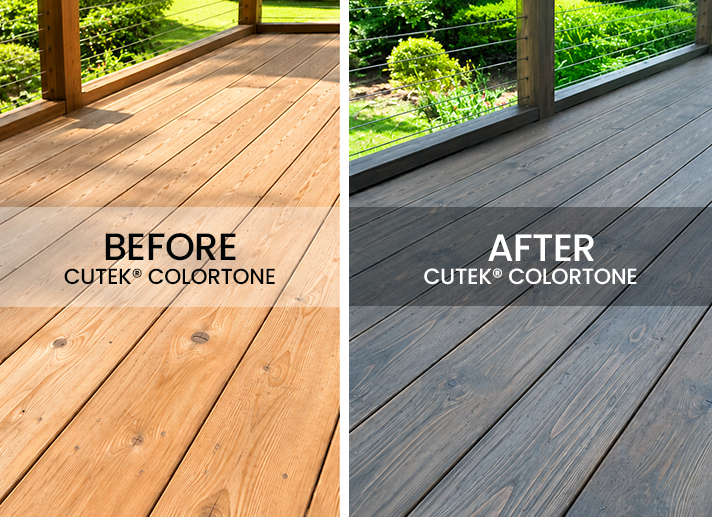
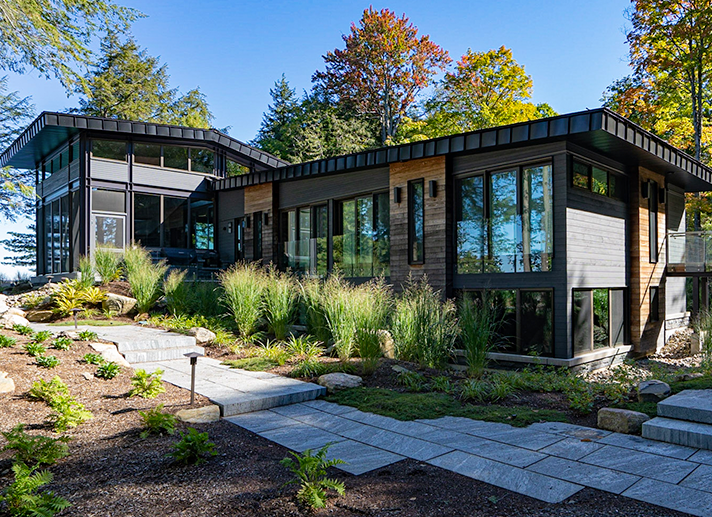
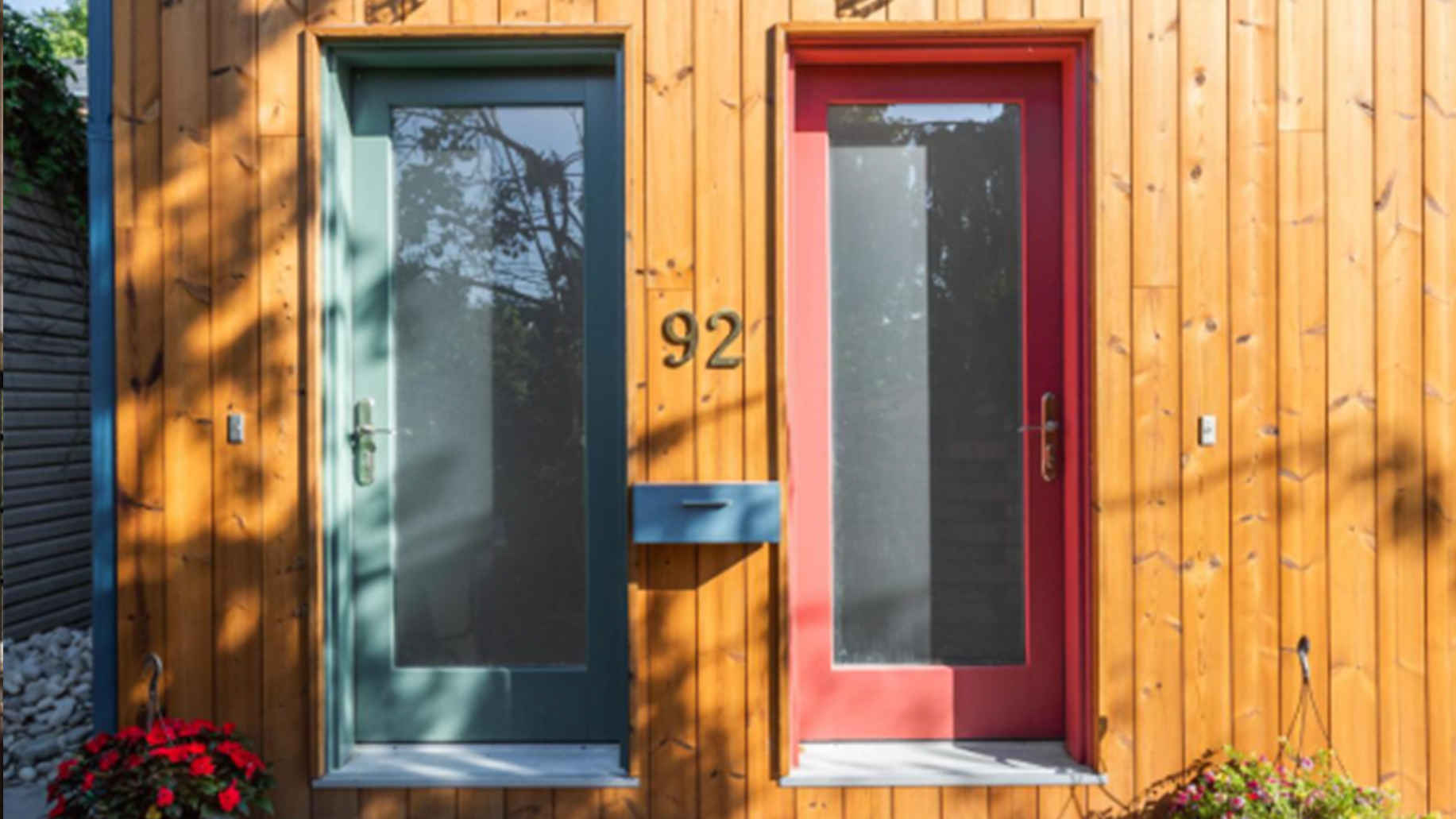
SEE CUTEK® COLORTONE IN ACTION
Watch how CUTEK® Colortones are mixed with CUTEK® Extreme to add color and UV protection while enhancing the natural character of wood.
HOW DO CUTEK® COLORTONES PROTECT WOOD COLOR?

DO I NEED TO ADD CUTEK® COLORTONE?
CUTEK® Extreme Clear oil protects wood from moisture within while allowing it to naturally silver over time.
Add CUTEK® Colortone when you want to maintain or change the wood color and add UV color protection.
PRODUCT DETAIL
CUTEK® Colortone is a transparent, UV-resistant pigment additive designed specifically for use with CUTEK® Extreme.
Works with CUTEK® Extreme
Extreme penetrates deep into the wood to provide moisture protection from within, while Colortone adds color and UV protection closer to the surface.
Slows UV weathering
Colortone pigments help absorb UV light, slowing the fading and silvering process caused by sun exposure.
Enhances natural wood
Unlike an opaque coating, Colortone allows the natural grain, texture and variation of the wood to remain visible.
Designed to fade, not peel
As the wood weathers, Colortone gradually fades and wears rather than forming a film that can peel or flake, making ongoing maintenance simple.
IMPORTANT: CUTEK® Colortones are designed only for use with CUTEK® Extreme and should not be mixed with third-party coatings.
CUTEK® Colortone is not applied on its own. It is mixed directly into clear CUTEK® Extreme oil before coating.
1–Choose and test your color
Always test your chosen Colortone on the actual wood before starting. Wood species, grain, porosity, preparation and application can all affect the final color.
2–Prepare your wood
Wood must be bare, clean and dry, with a moisture content below 17%. Prepare the surface with the appropriate CUTEK® Prepare product where required.
3–Mix only with CUTEK® Extreme clear oil
Stir the Colortone thoroughly before adding it to Extreme. Mix well from the bottom of the can and continue stirring regularly during application to maintain consistent color.
4–Apply thin, even coats
Apply the Colortoned Extreme according to the Extreme application instructions, allowing each coat to completely penetrate and dry before applying the next.
Want more color?
Double-strength Colortone can be used to increase color intensity and UV color protection.
PRO TIP: Always follow the product label and Technical Data Sheet for complete mixing and application instructions.
CUTEK® Colortone is always mixed with CUTEK® Extreme and is never applied on its own. The color is designed to gradually fade and weather rather than peel or flake, making maintenance straightforward.
When should I recoat
Recoat when the color has faded beyond your preferred appearance, or when the wood is no longer beading water.
Clean and recoat
Clean the wood with CUTEK® Quickclean or prepare with CUTEK® Wood Reviver where required. Once dry, apply a thin maintenance coat of Extreme mixed with your chosen Colortone.
Under normal conditions, there is no need to sand or strip an old surface coating.
How long will the color last
Color retention varies depending on the wood species, surface texture, preparation and exposure. Fully exposed horizontal surfaces such as decks and handrails generally require maintenance more frequently than vertical surfaces such as siding and fencing.
For ongoing color retention, continue adding your chosen Colortone to Extreme with future maintenance coats.
Downloads
FAQ Frequently Asked Questions
CUTEK® Colortones are concentrated pigments designed to be added to CUTEK® Extreme clear oil to help manage the color of exterior wood and provide protection from UV exposure.
They allow you to maintain or enhance the natural color of the wood, change its appearance, or create a weathered look - while CUTEK® Extreme continues to provide the underlying protection from within.
No.
CUTEK® Extreme can be used clear and will still protect the wood from within. When used without CUTEK® Colortone, the wood will gradually lighten and naturally silver over time.
Add Colortone if you want to maintain, enhance or change the color of the wood and provide additional UV protection.
CUTEK® Extreme protects and stabilizes the wood from within.
CUTEK® Colortone lets you choose how you want it to look.
Silver is the default. Color is a choice.
No. CUTEK® Extreme provides the same core protection whether it is used clear or with CUTEK® Colortone.
Extreme penetrates deeply into the wood, helping to manage moisture from within and improve dimensional stability by reducing moisture-related movement such as warping, cupping and splitting.
Adding Colortone does not change this internal moisture-management function. Instead, the Colortone adds pigment and UV protection to enhance or modify the color of the wood and slow the natural silvering process.
Without Colortone, Extreme still protects the wood - it simply allows the surface to naturally lighten and silver as it weathers.
Think of it simply:
CUTEK® Extreme protects and stabilizes the wood from within.
CUTEK® Colortone lets you choose how you want it to look.
Silver is the default. Color is a choice.
Your wood will still be protected from moisture - it will simply be allowed to naturally silver over time.
CUTEK® Extreme clear oil penetrates deeply into the wood to help manage moisture and improve dimensional stability. This protection does not depend on adding CUTEK® Colortone.
Without Colortone, exposure to sunlight and weather will gradually lighten the surface of the wood until it develops a natural silver-gray patina.
For many projects, this is exactly the desired result.
If you want to enhance or modify the color of the wood and slow the natural silvering process, add Colortone.
Silver is the default. Color is a choice.
CUTEK® Colortone contains pigments that help absorb UV radiation, reducing the amount of UV exposure reaching the surface of the wood and slowing the natural silvering process.
Over time, exposure to sunlight, weather and wear will gradually reduce the intensity of the Colortone. The color fades rather than forming a coating that cracks, peels or needs to be stripped away.
When the color has faded beyond the appearance you want, maintenance is simple: clean the wood and apply a maintenance coat of CUTEK® Extreme with your chosen Colortone to refresh the color. No sanding or stripping required.
How quickly the color fades will depend on the wood, the Colortone selected and the level of exposure. Horizontal surfaces, high-traffic areas and areas receiving greater weather and UV exposure may need their color refreshed sooner.
The Colortone gradually fades with exposure - so maintaining the look is about topping up the color, not removing an old coating and starting again.
Start with the look you want to achieve.
CUTEK® Colortone can be used to enhance the natural character of the wood, modify its color, or create an intentionally weathered appearance. The same Colortone can look quite different depending on the wood it is applied to, so the wood itself is an important part of the final color.
Consider:
Your wood species and natural color - the underlying wood influences the final appearance.
The look you want to achieve - natural, warmer, darker, lighter or intentionally weathered.
The surface texture - smooth and rough-sawn wood can take up pigment differently.
The level of exposure - UV, weather and wear will influence how the color changes over time.
Use our CUTEK® Colortone Visualizer to explore how different Colortones may look on different wood species, including single and double-strength options. Double strength provides a richer initial color and, because it contains more pigment, can also help the color last longer - making it particularly suitable for highly exposed areas.
It's a great way to narrow down your choices before testing.
Because every piece of wood is different, the Visualizer is indicative only. For the most accurate representation of the final color, always test with a CUTEK® Pre-Mixed Sample on the actual wood before proceeding with your project.
The Colortone provides the color, but the wood underneath is part of the final result.
No. The wood underneath plays a major part in the final color.
And we think that's one of the beautiful things about wood.
We love wood because no two pieces are exactly the same. Every species, board and grain has its own natural color, texture and character. We don't want to hide that natural beauty - our products are designed to highlight and enhance the unique characteristics of your wood.
CUTEK® Colortones work with the natural color and character of the wood rather than covering it with an opaque finish. This means the same Colortone can look noticeably different across different species - and even from one board to another within the same project.
The final appearance can be influenced by the wood's:
Natural color and grain
Species, density and porosity
Surface texture and preparation
Age and weathering
Natural variation from board to board
Use the CUTEK® Colortone Visualizer to explore how different Colortones may look across different wood species, but remember that these are indicative examples.
For the best representation of your wood, always test with a CUTEK® Pre-Mixed Sample on the actual wood before making your final selection.
Your wood is unique. CUTEK® Colortones are designed to enhance its character - not hide it.
Because the final color is created by the combination of the CUTEK® Colortone and your wood.
Wood species, natural color, grain, density, porosity, surface texture, preparation and age can all influence the final appearance. Even two pieces of the same species can respond differently.
A screen, printed color chart or our CUTEK® Colortone Visualizer can help you narrow down your choices, but they can only provide an indication of the final result.
Testing with a CUTEK® Pre-Mixed Sample on the actual wood lets you see how your chosen Colortones interacts with the wood before committing to the whole project.
For the most useful test:
Use the same wood and surface preparation planned for the project.
Test an area large enough to see the natural variation in the wood.
Allow the sample to penetrate and dry before assessing the final appearance.
Look at the sample in the location and lighting where the finished wood will be seen.
A sample on your wood will always tell you more than a color on a screen.
Yes. You don't have to wait for nature to create the look you're after.
CUTEK® Colortones include options designed to create weathered, gray and silver-toned finishes, allowing you to achieve the character of naturally aged wood while still using CUTEK® Extreme to protect the wood from moisture and improve dimensional stability from within.
This can also help create a more consistent appearance across areas that receive very different levels of exposure.
Think of a wraparound porch: one side may receive full sun and weather and naturally silver quite quickly, while another side remains sheltered and may take much longer to weather - or may never develop the same appearance. A weathered or silver-toned Colortone can help create a more consistent look across the entire project from the beginning.
As with every Colortone, the final appearance will be influenced by the natural color, grain and texture of your wood. Use the CUTEK® Colortone Visualizer to explore your options, then test with a CUTEK® Pre-Mixed Sample on your actual wood before making your final selection.
Want the weathered look without waiting for the weather? There's a CUTEK® Colortone for that.
Single strength means adding one CUTEK® Colortone to one gallon of CUTEK® Extreme.
This is the standard Colortone strength and provides pigment to enhance or modify the color of the wood while helping protect the surface from UV exposure and slow natural silvering.
Double strength means adding two Colortones per gallon of Extreme. The additional pigment creates a richer initial color and provides greater UV protection, helping the color last longer before it needs refreshing.
Double strength can be particularly useful for highly exposed areas where the wood receives greater levels of sun and weather.
You can explore both single and double-strength options in the CUTEK® Colortone Visualizer, but always test with a CUTEK® Pre-Mixed Sample on your actual wood before making your final selection.
Choose double strength when you want a richer initial color, greater UV protection or longer-lasting color retention.
Double strength uses two CUTEK® Colortones per gallon of CUTEK® Extreme, providing more pigment to absorb UV exposure. This can help the chosen color remain visible for longer before it needs refreshing.
Double strength is particularly worth considering for:
Highly exposed areas receiving strong or prolonged sunlight
Horizontal surfaces that experience greater UV and weather exposure
Projects where longer color retention is a priority
Designs where a richer or stronger initial color is desired
Remember that additional pigment also means a stronger initial color, and the result will vary depending on the wood species and surface texture.
Use the CUTEK® Colortone Visualizer to compare single and double-strength options, then test with a CUTEK® Pre-Mixed Sample on your actual wood before making your final choice.
More pigment means more UV protection - but it also means more color.
Yes, but keep it simple and repeatable.
Different CUTEK® Colortones can be combined to create a custom color. However, for most projects we recommend using whole Colortones rather than trying to measure out specific volumes out of a Colortone tube.
For example, you could combine one full Colortone of one color with one full Colortone of another color per gallon of CUTEK® Extreme. This creates a double-strength custom blend while keeping the pigment quantities controlled and, importantly, making the color much easier to reproduce later.
Maintaining the correct amount of pigment is also important because the Colortone provides the UV protection. Reducing or inaccurately measuring the amount of pigment may affect both the final color and the level of UV protection provided.
If creating a custom blend:
Use whole Colortones wherever possible.
Record the exact Colortones and quantities used.
Mix thoroughly to evenly disperse the pigments.
Keep your recipe for future maintenance.
Always test the finished combination on your actual wood before committing to the project.
IMPORTANT: Mixing two CUTEK® Pre-Mixed Samples together is not an accurate way to test a custom Colortone combination. The small sample size and difficulty of precisely controlling the pigment ratio mean the result may not accurately represent the color produced when full Colortones are mixed into a one-gallon can.
For more complex custom color combinations or dosing, contact CUTEK® Technical Support before proceeding.
The key with a custom color isn't just creating it - it's making sure you can create the same color again.
Yes. Our CUTEK® Colourtone Black Ash is a great option for creating a dark, charred-inspired appearance while still allowing the natural character of the wood to show through.
Dark and charred wood finishes have become increasingly popular in contemporary architecture and design. If you love that aesthetic but aren't using genuinely charred wood, Black Ash can help create a similar visual effect using CUTEK® Extreme and Colortone.
Unlike an opaque black coating, the final appearance is influenced by the wood underneath. Its grain, texture, natural color and surface preparation will all contribute to the finished result - which can create significant depth and character.
For an even richer, darker appearance, double-strength Black Ash may also be worth considering, particularly on highly exposed projects where the additional pigment provides greater UV protection and longer color retention.
Use the CUTEK® Colortone Visualizer to explore Black Ash at single and double strength, then test with a CUTEK® Pre-Mixed Sample on your actual wood before making your final selection.
Want the charred look without charring the wood? Black Ash may be exactly what you're looking for.
Yes. If you want to help maintain the natural color of your wood, choose a CUTEK® Colortone that closely complements its existing color and undertones.
CUTEK® Extreme used clear will still protect the wood from moisture and help improve dimensional stability, but it allows the surface to naturally lighten and silver with UV exposure.
Adding Colortone provides the pigment and UV protection needed to slow that natural silvering process and help maintain the appearance of freshly oiled wood for longer.
If maintaining a natural look is your goal, pay attention to the underlying hues already present in your wood. For example:
Naturally red or warm wood - look for a Colortone with similar red or warm undertones.
Yellow or golden wood - choose a Colortone that complements those yellow or golden hues.
Avoid choosing a noticeably different undertone unless you intentionally want to change, rather than enhance, the natural color.
This is particularly important with lighter-colored wood, because the selected Colortone will be more apparent. With darker wood, the natural color underneath will continue to strongly influence the final appearance.
The Colortones are transparent, not opaque. They're designed to work with the wood underneath, allowing its natural grain, texture, patterns and color variation to remain part of the finished result.
Use the CUTEK® Colortone Visualizer to find Colortones that complement your wood species, then test with a CUTEK® Pre-Mixed Sample on your actual wood before making your final selection.
Love the natural color of your wood? Choose a Colortone that works with it, not against it.
We recommend sticking to single or double strength.
Single strength uses one CUTEK® Colortone per gallon of CUTEK® Extreme, while double strength uses two per gallon. These ratios provide controlled, repeatable pigment levels, with double strength providing a richer initial color, greater UV protection and longer color retention.
Adding more Colortone beyond double strength does not necessarily mean a better result. Increasing the pigment concentration beyond the recommended ratios may affect the appearance and performance of the system and has not been designed as our standard application method.
If double strength isn't giving you the color you're looking for, don't simply keep adding more pigment. A different Colortone may achieve the desired result more effectively.
For anything beyond double strength, contact CUTEK® Technical Support before proceeding.
No. Only CUTEK® Colortone should be added to CUTEK® Extreme.
CUTEK® Colortones are specifically designed for use with CUTEK® Extreme. The pigments form part of the CUTEK® system, providing color and UV protection while working with the penetrating oil.
Third-party tints, pigments or colorants may use different chemistries or carriers and have not been designed or tested for compatibility with Extreme. Adding them may affect mixing, penetration, appearance or performance.
For a reliable and repeatable result, use only genuine CUTEK® Colortones with CUTEK® Extreme.
Likewise, CUTEK® Colortones are designed for CUTEK® Extreme and should not be added to third-party coatings or oils.
Because the wood underneath is part of the final color.
CUTEK® Colortones are transparent, so unlike an opaque paint, they don't cover the natural color, grain and character of the wood. The same Colortone can therefore look different depending on the wood it is applied to.
CUTEK® Pre-Mixed Samples show the colour of two coats at single strength. They’re mixed at double strength to give you that result in one brush-out. If you’ve applied only one coat at single strength, apply the second coat before comparing the color.
Differences can be influenced by:
Wood species and natural color
Natural variation from board to board
Surface texture and preparation
Age and previous weathering
Whether the surface is smooth, sanded, brushed or rough-sawn
The strength of Colortone used
Lighting and surrounding colors
Screens and printed materials can also reproduce color differently, which is why our Colortone Visualizer and color representations are indicative only.
For the most accurate indication of your finished result, always test with a Pre-Mixed Sample on the actual wood using the same surface preparation you intend to use for the project.
With a transparent color system, you're always seeing the Colortone and the unique wood underneath it working together.
Surface texture can have a significant effect on both the initial color intensity and how long that color lasts.
Rough-sawn wood is generally more readily accepting of oil, so it can take in more CUTEK® Extreme - and when that oil contains CUTEK® Colortone, it also receives more pigment. The textured surface also provides more nooks and crannies for that pigment to settle, contributing to a richer initial color and helping the colored appearance last longer.
On smoother wood, the same Colortone may appear lighter and the color may weather more quickly.
This means the same wood species and same Colortone can produce a noticeably different result depending on how the surface has been prepared or finished.
For the most accurate indication of your finished result, test with a CUTEK® Pre-Mixed Sample on wood prepared in the same way as your final project.
Yes. CUTEK® Colortone is designed to gradually fade and weather with exposure rather than form a surface coating that cracks, peels or flakes.
Colortone pigments help absorb UV radiation, slowing the natural silvering of the wood. Over time, exposure to sunlight, weather and physical wear such as foot traffic will gradually reduce the intensity of the color.
How quickly this happens will vary depending on factors such as:
Level of UV and weather exposure
Horizontal versus vertical surfaces
Foot traffic and physical wear
Wood species and surface texture
Colortone selected
Single or double-strength application
The important difference is what happens when the color fades. You don't need to sand or strip away an old surface coating. When the color has faded beyond the appearance you want, simply clean the wood and apply a maintenance coat of CUTEK® Extreme with your chosen Colortone to refresh the color.
Generally, yes. Horizontal surfaces typically experience greater exposure and wear than vertical surfaces, so the color may fade more quickly.
Decks, steps, handrails and other horizontal surfaces can be subjected to more direct UV exposure, weather and, where applicable, foot traffic and physical wear.
Vertical surfaces such as siding, screens and fences are generally subject to less physical wear and may retain their color for longer.
However, exposure matters more than orientation alone. A heavily exposed vertical wall may weather faster than a sheltered deck, so assess each area based on its actual conditions rather than assuming the entire project will fade at the same rate.
This also means different parts of the same project may need their color refreshed at different times.
Let the appearance of the wood tell you when it's time to refresh the color.
Yes, but the existing CUTEK® Colortone pigment remaining on the wood will influence the final result.
Changing from a lighter Colortone to a darker Colortone is generally straightforward, because the darker pigment can overpower the lighter Colortone remaining on the wood.
Before changing color, clean the wood thoroughly with CUTEK® Quickclean and a pressure washer. This will also help remove old, weathered Colortone pigment from the surface before the new maintenance coat is applied.
Changing from a darker Colortone to a lighter Colortone is more complex, because remaining darker pigment can continue to influence the appearance of the new, lighter Colortone.
If you're planning to move from a darker Colortone to a significantly lighter one, contact CUTEK® Technical Support for project-specific advice before proceeding.
Yes. You can introduce CUTEK® Colortone in future coats even if CUTEK® Extreme was originally applied clear.
If the wood is still close to its original natural color, you can select a Colortone based on the appearance you want to maintain or create.
If the wood has already begun to weather or silver, however, the condition and color of the wood underneath will influence the final result. Remember, Colortones are transparent - they work with the wood underneath rather than covering it.
If the wood has significantly silvered and you want to return it closer to its original natural color before adding Colortone, CUTEK® Wood Reviver can be used to help restore the wood's natural appearance first.
Make sure the wood is clean, dry and properly prepared for the maintenance coat. Once you're happy with the condition and appearance of the wood, apply Extreme with your chosen Colortone.
Starting clear doesn't lock you into staying clear - you can choose to introduce color later.
Yes - but first decide whether you want to keep the silvered appearance or restore more of the wood's original color.
If you like the weathered or silvered look, you can choose a CUTEK® Colortone that complements that appearance and helps maintain the design direction you're after.
If you want to bring back more of the wood's original natural color, use CUTEK® Wood Reviver first to help remove weathering and restore the wood's natural appearance. Once the wood has been properly prepared and is completely dry, you can apply CUTEK® Extreme with your chosen Colortone.
Remember that Colortones are transparent. Applying Colortone over silvered wood won't hide the weathering underneath - the condition and color of the wood will remain part of the finished appearance.
For best results, get the wood looking the way you want it before adding your chosen Colortone.
Uneven color is usually caused by differences in the wood, surface preparation or application.
Because CUTEK® Colortones are transparent, natural variations in the wood remain visible. Differences in grain, density, porosity, weathering and surface texture can all influence how the Colortone appears across a project.
If the variation looks more pronounced than you expected, also check:
Was the wood prepared consistently across the entire surface?
Was the CUTEK® Extreme and Colortone thoroughly mixed before and during application to keep the pigment evenly dispersed?
Were coats applied evenly and at the recommended application rate?
Are some areas rougher, smoother, newer or more weathered than others?
Don't automatically apply another coat to try to even out the color. Give the wood time to dry and assess the finished appearance first.
If the result still looks unusually uneven or you're unsure what has caused it, send photos and details of the project to CUTEK® Technical Support before doing anything further.
Stop and assess the result before applying more product.
Because CUTEK® Colortones are transparent, the final appearance is influenced by the wood underneath. Species, natural color, grain, surface texture, preparation and weathering can all cause the finished result to look different from a screen, color chart or even another project using the same Colortone.
If the color isn't what you expected:
Allow the CUTEK® Extreme to fully penetrate and dry before assessing the final appearance.
Check that the correct Colortone and strength were used.
Consider whether the natural color or condition of the wood is influencing the result.
Don't automatically apply another coat or attempt to remove the Colortone.
If you're still unhappy with the result, take clear photos and contact CUTEK® Technical Support before doing anything further. Tell us which wood species, Colortone and strength you used, how the wood was prepared and how the product was applied.
Before you make more work for yourself, ask us. That's what we're here for.
Mix it thoroughly before and during application.
CUTEK® Colortones contain pigment, which can settle over time. Stir CUTEK® Extreme thoroughly after adding Colortone, making sure any pigment at the bottom of the can is fully mixed back in.
Continue to stir the product regularly during application to help keep the pigment evenly dispersed - particularly on larger projects where the can may be open for some time.
If the pigment isn't kept properly mixed, the amount of pigment being applied can vary as you work through the can, potentially resulting in uneven or inconsistent color across the project.
Pro Tip: if using a brush and paint tray to apply, mix the can thoroughly before refilling the paint tray.
CUTEK® RESOURCE CENTRE
Product guides, how-to advice, color tools and project inspiration to help you choose the right CUTEK® products and get the best result from your wood.
CUTEK® PRE-MIXED SAMPLES
Our "ready to use" CUTEK® Pre-Mixed Samples make it easy to to test different colors on your own wood, to find the CUTEK® Colortone that works best for your project.
Head to your local CUTEK® Retailer today to get your FREE Pre-Mixed sample. Find the one nearest to you HERE
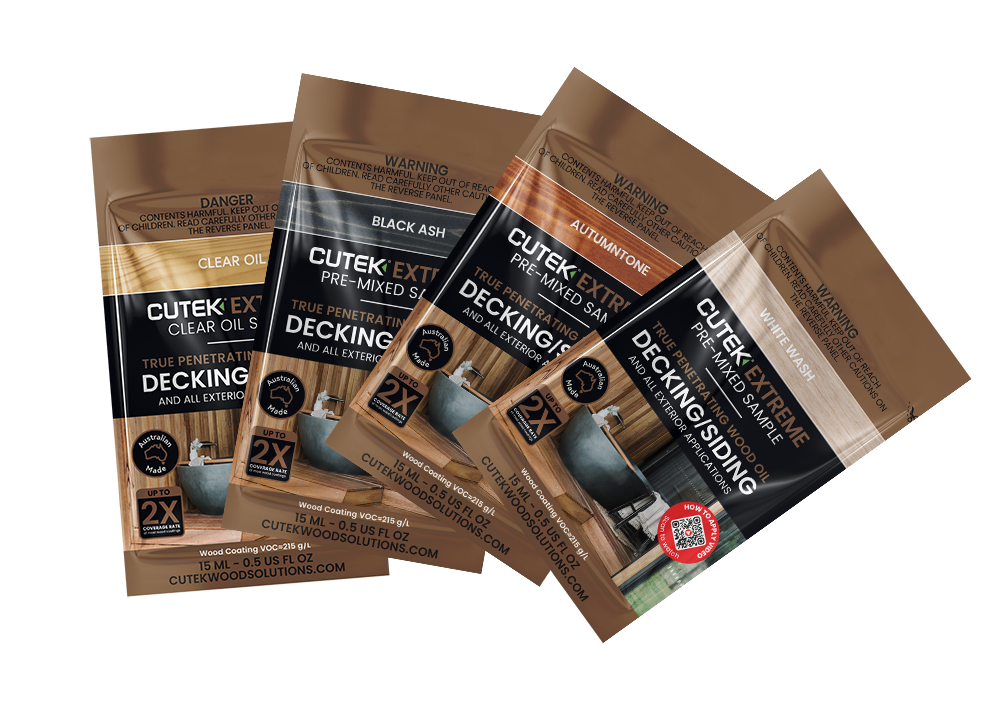
TEST DIFFERENT CUTEK® PRE-MIXED SAMPLES BEFORE STARTING YOUR PROJECT
PRODUCT DETAIL
Wood species, age, condition, preparation and previous exposure can all influence how a CUTEK® Colortone appears. Colors shown online, in print or on another type of wood should therefore be used as a guide only.
CUTEK® Pre-Mixed Samples allows you to apply a ready to use mix of CUTEK® Extreme oil with a double strength of CUTEK® Colortone, directly to your project wood before purchasing the full-size products. Testing a small area helps you compare color options and see how the natural grain will contribute to the overall appearance.
The sample provides a close indication of the expected color. However, the completed project may vary depending on surface preparation, application, number of coats and natural variations within the wood.
Always test first
For the most useful comparison, test samples side by side on a clean, prepared section or off-cuts of the actual wood being coated.
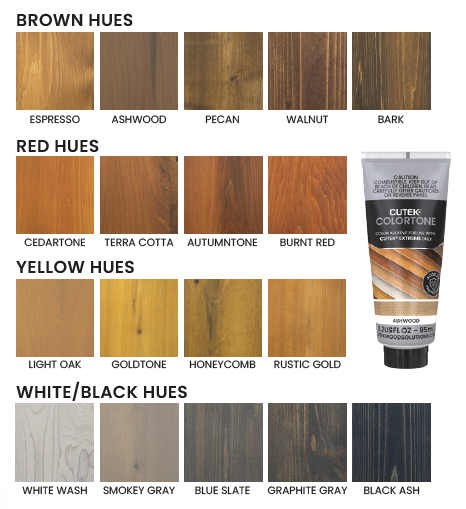
Wood species, age, condition, preparation and previous exposure can all influence how a CUTEK® Colortone appears. Colors shown online, in print or on another type of wood should therefore be used as a guide only.
CUTEK® Pre-Mixed Samples allows you to apply a ready to use mix of CUTEK® Extreme oil with a double strength of CUTEK® Colortone, directly to your project wood before purchasing the full-size products. Testing a small area helps you compare color options and see how the natural grain will contribute to the overall appearance.
The sample provides a close indication of the expected color. However, the completed project may vary depending on surface preparation, application, number of coats and natural variations within the wood.
Always test first
For the most useful comparison, test samples side by side on a clean, prepared section or off-cuts of the actual wood being coated.
BEFORE YOU START:
CUTEK® Pre-Mixed Samples contain double strength CUTEK® Colortone. One sample coat provides an approximate indication of the color and finish achieved with two coats of CUTEK® Extreme oil mixed at standard CUTEK® Colortone strength.
PLEASE NOTE: The sample is a color guide only. The finished appearance may vary depending on the wood species, age, condition, natural grain, surface preparation and application.
STEPS
1–Prepare your wood
Choose a clean, dry and properly prepared section of the wood you intend to coat. Protect surrounding surfaces with a drop sheet.
2–Gather your equipment
You will need a small brush, paint container, cleaning rags and a drop sheet.
3–Mix the sample thoroughly
Knead, invert and shake the sachet to evenly distribute the CUTEK® Colortone throughout the oil. Tap the contents away from one corner, then carefully cut a small opening.
4–Apply one thin coat
Pour a small amount into a container or directly onto the wood. Brush out immediately in the direction of the grain to form a thin, even coat, avoiding heavy application or pooling.
5–Allow the sample to dry
Drying times vary depending on the wood and conditions. Dense woods may take longer to dry, while sunlight and warmer conditions can speed up the process.
6–Assess the color
Allow the oil to cure towards its natural matte finish, then view the sample in natural light before choosing your CUTEK® Colortone.
Please ensure you test on a piece of wood only, and NOT on your deck or siding project.
FAQ Frequently Asked Questions
Because the final color is created by the combination of the CUTEK® Colortone and your wood.
Wood species, natural color, grain, density, porosity, surface texture, preparation and age can all influence the final appearance. Even two pieces of the same species can respond differently.
A screen, printed color chart or our CUTEK® Colortone Visualizer can help you narrow down your choices, but they can only provide an indication of the final result.
Testing with a CUTEK® Pre-Mixed Sample on the actual wood lets you see how your chosen CUTEK® Colortone interacts with the wood before committing to the whole project.
For the most useful test:
Use the same wood and surface preparation planned for the project.
Test an area large enough to see the natural variation in the wood.
Allow the sample to penetrate and dry before assessing the final appearance.
Look at the sample in the location and lighting where the finished wood will be seen.
A CUTEK® Pre-Mixed Sample lets you see the color where it matters most - on your wood.
It should give you a very good indication of the final color, but it may not be an exact match.
CUTEK® Pre-Mixed Samples are designed to help you see how a particular CUTEK® Colortone will interact with your actual wood before committing to the full project.
The sample is prepared at double strength, allowing a single sample application to provide an indication of the color achieved through the standard CUTEK® Extreme application system.
However, the finished appearance can still be influenced by factors such as:
Natural variation within the wood
Surface preparation and texture
Application method and amount applied
The number of coats used on the finished project
Whether you ultimately choose single or double strength CUTEK® Colortone
For the most useful comparison, apply your sample to wood that has been prepared in the same way as the final project and assess it once it has fully penetrated and dried.
Think of your Pre-Mixed Sample as the best indication of how the CUTEK® Colortone will work with your wood - not a guaranteed exact color match.
Yes. CUTEK® Pre-Mixed Samples are ready to use.
Each colored sample contains CUTEK® Extreme already mixed with the selected CUTEK® Colortone, so there's no measuring, tinting or additional mixing required before testing.
If you choose a Clear sample, this contains CUTEK® Extreme without any CUTEK® Colortone added.
Simply mix the sample thoroughly before use, then apply it to your clean, bare and dry wood following the sample application instructions.
This allows you to see how CUTEK® Extreme and your chosen CUTEK® Colortone interact with the actual wood before committing to your full project.
No. For an accurate result, test your CUTEK® Pre-Mixed Sample on clean, bare and dry wood.
CUTEK® Extreme is designed to penetrate into the wood. Existing paints, stains, coatings or other treatments may prevent that penetration and will also influence the color you see, meaning the sample will not give you an accurate indication of the finished result.
If your wood has an existing coating, it should be properly removed and the wood prepared before testing your sample.
For the most useful comparison, prepare the sample area in the same way you intend to prepare the finished project.
The sample needs to interact with your wood - not the coating that's already on it.
No. Mixing Pre-Mixed Samples together is not an accurate way to test a custom CUTEK® Colortone combination.
Because the samples contain very small quantities of product, it is difficult to precisely control the amount of pigment being combined. Even small variations in the mix can affect the final color, meaning the result may not accurately represent the same combination made at full scale.
If you want to create a custom Colortone blend, we recommend keeping the formula simple and repeatable by using whole Colortones. For example, one full Colortone of one color combined with one full Colortone of another color in one gallon of CUTEK® Extreme.
Remember, two Colortones per gallon is double strength. This means your custom blend will have a richer initial color and additional pigment for greater UV protection and longer color retention than a single-strength application.
This means there isn't a reliable sample-size method for testing a custom blend first - the custom combination needs to be mixed at full one-gallon scale to accurately control the pigment ratio.
For more complex custom color combinations, contact CUTEK® Technical Support before proceeding.
CUTEK® RESOURCE CENTRE
Product guides, how-to advice, color tools and project inspiration to help you choose the right CUTEK® products and get the best result from your wood.

Thank You!
Your enquiry has been submitted successfully. Our friendly team will be in touch with you shortly.